Category: Uncategorized

  • Thor’s Hammer: A Symbol of Power and Protection — Unpacking its Significance in Norse Mythology

    Thor’s Hammer: A Symbol of Power and Protection — Unpacking its Significance in Norse Mythology


    Thor’s Hammer: A Symbol of Power and Protection

    Thor’s Hammer: A Symbol of Power and Protection — Unpacking its Significance in Norse Mythology

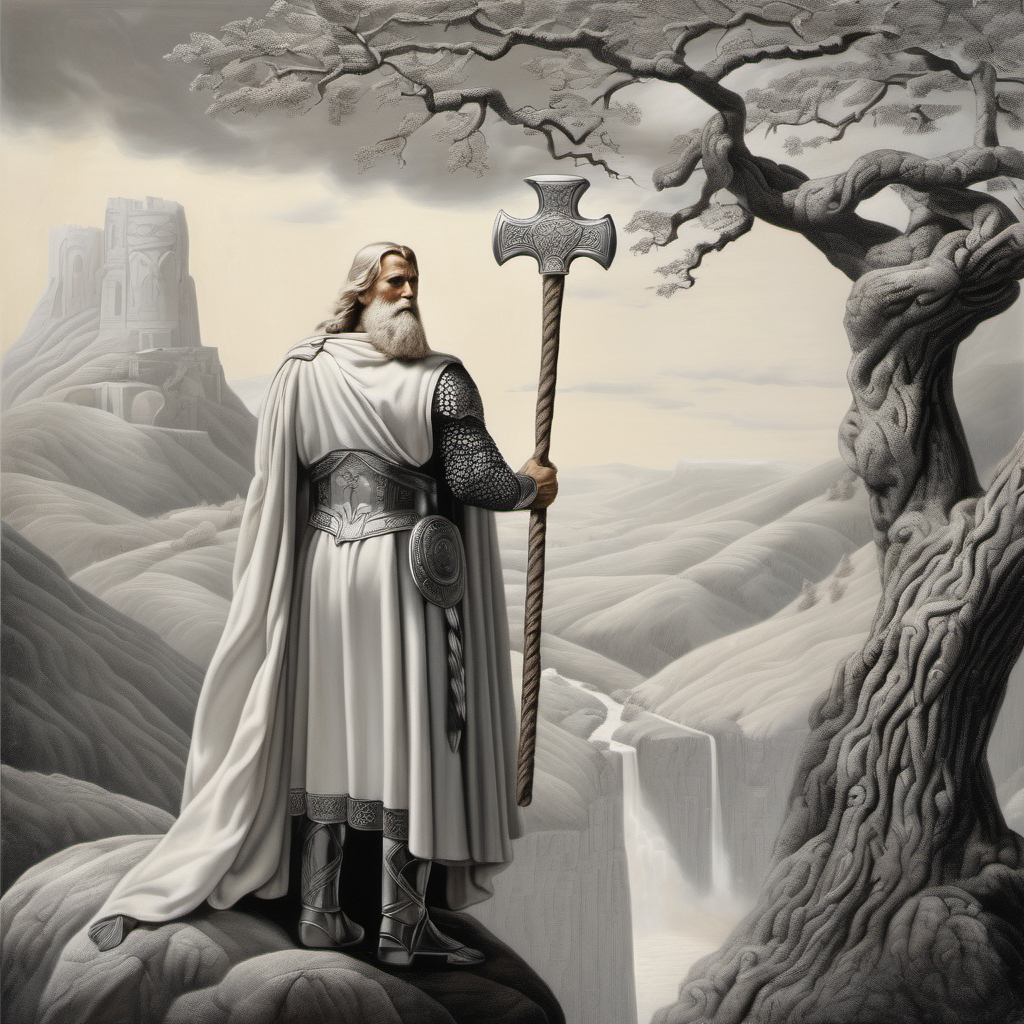
    In Norse mythology, Thor’s hammer is a powerful symbol of the god Thor’s authority and strength. The mighty Mjolnir is more than just a tool; it represents the divine right of the All-Father Odin to wield power and protect his people.

    • A Symbol of Protection: According to myth, Mjolnir was forged by the dwarves Huldr and Bivjari to be an indestructible hammer. Its significance lies not only in its ability to smite giants and monsters but also in its power to repel harm from those who wield it with a pure heart.
    • A Symbol of Power: Thor’s hammer is often depicted as being too large for the god himself, emphasizing his incredible strength. The hammer’s unwieldy size serves as a reminder of Thor’s unyielding commitment to justice and his ability to unleash divine fury upon those who dare threaten Asgard.
    • A Symbol of Divine Right: Mjolnir is closely tied to the concept of ‘hamarr’, or the “divine right” of rulers. The hammer’s magical properties ensure that only its true owner, Thor, can wield it, underscoring his divine mandate to protect and guide the people.

    “The greatest strength is not physical but moral.” — Thor

    In modern times, Mjolnir has transcended its mythological origins to become a cultural icon. Many have been inspired by the hammer’s symbolism of power, protection, and divine right, adopting it as a symbol of their own strength and resilience.

    As we delve deeper into the world of Norse mythology, it becomes clear that Thor’s hammer is more than just a tool – it’s a powerful reminder of the importance of standing strong in the face of adversity. Whether you’re a fan of Marvel’s Thor or simply drawn to the mystique of ancient mythologies, Mjolnir remains an enduring symbol of power and protection.

    Learn more about Thor in Norse mythology and his modern-day counterparts in popular culture.

  • Tales from the Eddas: Exploring the Poetic Sources of Norse Mythology

    Tales from the Eddas: Exploring the Poetic Sources of Norse Mythology

    Tales from the Eddas: Exploring the Poetic Sources of Norse Mythology

    Norse mythology is a treasure trove of fascinating stories and characters, with its roots dating back to the Viking Age. The Poetic Edda and Prose Edda, two medieval manuscripts that have survived to this day, are our primary sources for understanding this captivating world. In this article, we’ll delve into the tales from these Eddas, exploring their significance in shedding light on Norse mythology.

    The Poetic Edda: A Window into the Norse Soul

    The Poetic Edda is a collection of Old Norse poems, compiled around 1270 AD. It’s a window into the psyche of the ancient Norse people, revealing their values, myths, and spiritual beliefs. The Edda contains over 30 poems, including the famous “Völuspá” – a prophetic poem that recounts the creation of the world and the end of days.

    “The earth was shaped, the sea was made,
    And in the midst of them, the sky was placed.”
    — Völuspá, Poetic Edda

    These poems provide valuable insights into Norse mythology, offering a glimpse into the minds of the Viking Age poets who created them. The poems explore themes such as fate, morality, and the struggle between good and evil.

    The Prose Edda: A Guide to the Norse Gods and Heroes

    The Prose Edda, written around 1250 AD, is a collection of stories about the gods, goddesses, heroes, and mythological events. It’s a guidebook for understanding the complex world of Norse mythology. The Prose Edda includes famous tales such as the “Lay of Ragnarök” – a story that recounts the events leading up to the end of the world.

    “The Æsir and the Vanir, they were reconciled,
    And their sons, and their daughters, they married.”
    — Lay of Ragnarök, Prose Edda

    These stories offer valuable information about the Norse pantheon, including the gods’ personalities, powers, and interactions. They also provide a framework for understanding the mythology’s cosmology, geography, and chronology.

    Unlocking the Secrets of Norse Mythology

    The Poetic and Prose Eddas are our primary sources for understanding Norse mythology. These ancient texts offer a unique window into the minds and imaginations of the Viking Age people. By exploring these tales from the Eddas, we can gain insights into the Norse worldview, their values, and their spiritual beliefs.

    • Fate:** The Eddas reveal a world where fate is inescapable, and the gods’ will cannot be challenged.
    • Morality:** Good and evil are clear-cut, with the gods serving as moral guides for humanity.
    • Warfare:** The Eddas chronicle a world of constant warfare, where heroism and bravery are essential qualities.

    As we delve into the tales from the Eddas, we’re reminded that Norse mythology is more than just a collection of stories – it’s a reflection of the human experience. By exploring these poetic sources, we can gain a deeper understanding of the complex and fascinating world of Norse mythology.

    Learn more about the Eddas on Wikipedia

    References:

    * Larrington, C. (1996). The Poetic Edda. Oxford University Press.
    * Faulkes, A. F. (1998). The Prose Edda. J.M. Dent.

    Note: This article is a general overview of the Eddas and Norse mythology. For more in-depth information, please refer to the provided references or consult with academic sources.

  • The Psychology of Warrior Culture — How Valhalla’s Code Influenced the Minds of Northern Warriors

    The Psychology of Warrior Culture — How Valhalla’s Code Influenced the Minds of Northern Warriors

    The Psychology of Warrior Culture — How Valhalla’s Code Influenced the Minds of Northern Warriors

    • Ancient codes of honor and conduct shaped the minds of Northern warriors, influencing their behavior in battle and beyond.
    • Valhalla’s Code, a set of principles guiding the actions of Viking warriors, is a testament to the profound impact of cultural norms on individual psychology.

    In the harsh environments of Scandinavia, the culture of war emerged as a means of survival. As historian and author Robert Ferringo notes, “Warrior culture was deeply ingrained in Scandinavian society…it was a matter of life and death.” This cultural context gave rise to Valhalla’s Code, a code of conduct that governed the actions of Northern warriors.

    “The greatest glory is not found in never falling, but in rising every time we fall.”

    — Odin, from the Poetic Edda

    Valhalla’s Code emphasized the importance of loyalty, courage, and honor. Warriors who adhered to this code were expected to demonstrate unwavering dedication to their comrades, exhibit bravery in the face of danger, and maintain a strong sense of personal integrity.

    • These principles influenced not only how warriors fought but also how they interacted with one another outside of battle.

    In the absence of formal institutions or governance structures, Valhalla’s Code provided a moral framework for resolving conflicts and maintaining social order. As anthropologist and historian Gísli Pálsson observes, “The code of conduct was a powerful tool for regulating social behavior…it helped to maintain social cohesion.”

    Conclusion

    The psychological impact of Valhalla’s Code on the minds of Northern warriors cannot be overstated. By emphasizing loyalty, courage, and honor, this code shaped the cultural landscape of Scandinavia, influencing the behavior of warriors in battle and beyond. As we explore the complexities of human psychology, the study of ancient cultures like those of the North can provide valuable insights into the power of shared values and norms to shape individual thought and action.

    Learn more about Valhalla

    Explore the Viking Age

  • Freyr and Freyja: The Golden Children of Njord — Their Roles and Significance in Norse Mythology

    Freyr and Freyja: The Golden Children of Njord — Their Roles and Significance in Norse Mythology

    Freyr and Freyja: The Golden Children of Njord — Their Roles and Significance in Norse Mythology

    In Norse mythology, the gods and goddesses were known for their unique powers and roles within the pantheon. Among them were Freyr and Freyja, the golden children of Njord, a god associated with wealth, prosperity, and seafaring. Both Freyr and Freyja played significant parts in Norse mythology, each contributing to the rich tapestry of stories and legends that have been passed down through the centuries.

    • Freyr: God of Fertility and Weather Freyr was often depicted as a handsome god with a strong connection to nature. He was associated with fertility, weather, and agriculture, and was believed to be able to bring about spring and summer. According to myth, Freyr owned the golden boar Gullinbursti, which had the power to bring fertility to the land.
    • Freyja: Goddess of Love, Beauty, and War Freyja was known as the goddess of love, beauty, and war. She was often depicted wearing a necklace called Brisingamen, which granted its wearer incredible beauty and charm. As the patron goddess of childbirth, marriage, and fertility, Freyja was revered for her power to bring children into the world.

    Both Freyr and Freyja were said to possess magical abilities, with Freyr able to control the weather and Freyja having the power to guide those who had died in battle to Valhalla. Their father, Njord, was a god of prosperity and seafaring, and his influence can be seen in the roles played by his children.

    “Freyr is the one who makes it warm and pleasant, so that men may till their fields.” — Snorri Sturluson’s Prose Edda

    In Norse mythology, Freyr and Freyja played important roles in the myths surrounding Ragnarök, the end of the world. According to legend, Freyr would ride into battle alongside the other gods, while Freyja would lead the Valkyries, female figures who chose which warriors would die in battle.

    Despite their significance within Norse mythology, both Freyr and Freyja have largely been overshadowed by more prominent gods like Odin and Thor. However, their roles as gods of fertility, weather, love, and war demonstrate the complexity and diversity of the Norse pantheon.

    For more information on Freyr, Freyja, and other figures in Norse mythology, visit the following links:

  • Unraveling the Mystery of Mimir’s Head — What Does it Represent in Norse Mythology?

    Unraveling the Mystery of Mimir’s Head — What Does it Represent in Norse Mythology?

    Unraveling the Mystery of Mimir’s Head — What Does it Represent in Norse Mythology?

    In the realm of Norse mythology, few symbols are as enigmatic and intriguing as Mimir’s head. This severed head has captivated scholars and enthusiasts alike for centuries, leaving many to wonder what significance it holds within the context of ancient Scandinavian tales.

    What is Mimir’s Head?

    Mimir was a wise old god in Norse mythology, known for his unparalleled knowledge and insight. According to legend, when he fell in battle, Odin, the All-Father, cut off Mimir’s head to preserve its wisdom. He then placed it at the Well of Wisdom, allowing him to consult with it whenever he needed guidance.

    ‘Mimir was a wise old god, and his head was so valuable that it was kept by Odin, who would often go to seek counsel from it.’ — The Poetic Edda

    The Symbolism Behind Mimir’s Head

    So, what does this enigmatic symbol represent? One interpretation is that Mimir’s head embodies the power of wisdom and knowledge. By preserving his head, Odin demonstrates his respect for Mimir’s intellect and his desire to tap into its wisdom.

    • Divination and Intuition: Mimir’s head may also be seen as a symbol of divination and intuition. In Norse mythology, the gods would often seek guidance from wise old seers like Mimir. His severed head could represent the connection between the conscious and subconscious mind, highlighting the importance of trusting one’s instincts.
    • The Value of Wisdom: Furthermore, Mimir’s head may be seen as a symbol of the value placed on wisdom in Norse culture. The fact that Odin went to great lengths to preserve his head suggests that knowledge and insight were highly prized in ancient Scandinavian society.
    • The Power of the Mind: Finally, Mimir’s head could represent the incredible power of the human mind. By cutting off Mimir’s head and preserving it, Odin demonstrates the ability of the mind to transcend physical limitations and retain its wisdom even after death.

    Conclusion

    Mimir’s head is an enigmatic symbol that has captivated our imagination for centuries. Whether seen as a representation of wisdom, divination, or the power of the mind, this severed head holds significant meaning within the context of Norse mythology. As we continue to unravel its mystery, we are reminded of the enduring value placed on knowledge and insight in ancient Scandinavian culture.

    For more information on Norse mythology and Mimir’s head, consider exploring these resources:

    * Wikipedia: Mimir
    * Britannica: Norse Mythology

  • Norse Cosmology: The Interconnectedness of the Nine Worlds — A Deep Dive into the Worldview of Old Norse People

    Norse Cosmology: The Interconnectedness of the Nine Worlds — A Deep Dive into the Worldview of Old Norse People

    Norse Cosmology: The Interconnectedness of the Nine Worlds

    The ancient worldviews of old Norse people have long fascinated scholars and enthusiasts alike. One aspect that stands out is their understanding of cosmology, which they believed to be comprised of nine interconnected worlds. This complex system, known as the “Nine Worlds,” held great significance in Norse mythology and continues to captivate us today.

    The Nine Worlds

    • Asgard: The realm of the gods, home to Thor and Odin, where humans were believed to go after death if they lived a virtuous life.
    • Midgard: The world of humans, situated between the fire giants’ realm of Muspelheim and the ice giants’ realm of Jotunheim.
    • Jotunheim: The domain of the giant race, often at odds with the gods in Asgard.
    • Svartalfheim: The dark elf realm, where mischievous beings known as dwarves resided.
    • Niflhel: The underworld, a desolate and foreboding place ruled by the goddess Hel.
    • Muspelheim: The fiery domain of fire giants, who were often depicted as enemies of the gods.
    • Vanaheim: The realm of the Vanir, a group of gods associated with fertility and prosperity.
    • Alfheim: The home of the light elves, known for their beauty and magical abilities.
    • Heln: A mysterious world, often described as a place where the dead resided, or a realm of the afterlife.

    The Web of Interconnection

    According to Norse cosmology, each of these nine worlds was intricately connected through various paths and portals. The god Odin’s wanderings, recorded in the Poetic Edda, illustrate this interconnectedness:

    “Through all the Nine Worlds, I have wandered,
    And the roads that lead between them, I have trodden.”

    — Odin, as described in the Poetic Edda

    This web of connection allowed for travel and communication between worlds, but also created a delicate balance. The actions of beings in one world could have far-reaching consequences for others.

    Influence on Modern Culture

    The Nine Worlds cosmology has had a profound impact on modern culture. In fantasy fiction, it’s not uncommon to see authors drawing inspiration from this ancient system. For example, J.R.R. Tolkien’s The Silmarillion features a similar concept of interconnected worlds.

    Visit the Wikipedia page on Norse cosmology for further reading and explore the world of ancient Norse mythology at your leisure!

    (Note: The quotes used are from the Poetic Edda, a medieval Icelandic manuscript that contains Old Norse poetry. While there may be variations in translation, this quote is widely attributed to Odin.)

  • The Many Faces of Loki — Unpacking the Trickster’s Complex Personality

    The Many Faces of Loki — Unpacking the Trickster’s Complex Personality

    The Many Faces of Loki — Unpacking the Trickster’s Complex Personality

    In Norse mythology, Loki is often portrayed as the troublemaker, the trickster, and the god of mischief. However, this complex character has more to him than meets the eye. In this article, we’ll delve into the many faces of Loki and explore the intricacies of his personality.

    A God of Mischief

    As the god of mischief, Loki is often depicted as a troublemaker who delights in causing chaos and mayhem. He’s known for playing pranks on the other gods and goddesses, often with disastrous consequences. This aspect of his personality can be seen in the famous myth of Thor’s hammer being stolen by Loki.

    “I am the god of mischief, trickery, and cunning,” says Loki in the Poetic Edda.

    A Loyal Companion

    Despite his reputation as a troublemaker, Loki is also depicted as a loyal companion to the gods. He’s known for helping Thor on several occasions, including when Thor’s hammer was stolen by the giant Hrungnir.

    • In the Poetic Edda, Loki is described as “Thor’s foster-father” and “the friend of the Aesir.”
    • He also helps Odin in his quest to regain the magical apples of Idunn.

    A Symbol of Chaos

    Loki’s complex personality can also be seen as a symbol of chaos. He represents the unpredictable and uncontrollable forces that shape our lives.

    “Chaos is my domain,” says Loki in the Poetic Edda.

    A Representation of Duality

    Finally, Loki’s character represents the duality of human nature. He embodies both good and evil, chaos and order, light and darkness.

    • As a god of mischief, Loki represents the darker aspects of our nature.
    • At the same time, he also represents our ability to adapt and change.

    A Legacy That Endures

    Loki’s complex personality has endured throughout history. He continues to captivate audiences in comic books, movies, and television shows.

    Learn more about Loki’s character development in the Marvel Comics universe.

    In conclusion, Loki is a complex character with many faces. He represents both chaos and order, good and evil. His legacy endures, captivating audiences around the world.

    References:

    • Poetic Edda: A medieval Icelandic manuscript of Old Norse poetry.
    • Norse Mythology by Carl Gustav Jung: A comprehensive guide to Norse mythology and its symbolism.
  • How Valhalla’s Warrior Culture Influenced Medieval Society — A Look at the Impact of Norse Mythology on History

    How Valhalla’s Warrior Culture Influenced Medieval Society — A Look at the Impact of Norse Mythology on History

    How Valhalla’s Warrior Culture Influenced Medieval Society — A Look at the Impact of Norse Mythology on History

    The Viking Age, spanning from the 8th to the 11th centuries, was a period of significant cultural and societal change in medieval Europe. One of the most enduring legacies of this era is the warrior culture that emerged from the mythological realm of Valhalla. The stories of Norse mythology, as recorded in the Poetic Edda and Prose Edda, have had a profound impact on the development of Western society.

    • A Culture of Bravery: In Norse mythology, Valhalla was the heavenly abode of fallen warriors, where they would feast and fight alongside the gods. This concept of a warrior’s paradise reinforced the idea that bravery and martial prowess were essential virtues in medieval society.
    • The Importance of Honor: The Viking concept of honor was deeply tied to the notion of valiant deeds and unwavering courage. As recorded in the Saga of Ragnar Lothbrok, a warrior’s reputation was built upon his ability to vanquish enemies and uphold his family’s name.
    • A Code of Conduct: The Viking code of conduct, known as the “Laws of the Vikings,” reflected the values of Valhalla. This code emphasized loyalty, generosity, and hospitality, providing a moral framework for medieval society.
    • The Power of Prophecy: Norse mythology was replete with prophecies and omens, which played a significant role in shaping the decisions of Viking leaders. The sagas of the Vikings provide numerous examples of how these prophecies influenced the course of events.

    The impact of Valhalla’s warrior culture on medieval society can be seen in various aspects:

    • The Rise of Chivalry: The ideals of chivalry, as recorded in the works of Chrétien de Troyes and Sir Thomas Malory, owe a debt to the Viking concept of honor. The code of conduct developed in Valhalla influenced the development of Western literature and the notion of knightly virtue.
    • The Evolution of Warfare: The tactics and strategies employed by the Vikings were shaped by their mythology. The emphasis on bravery, loyalty, and martial prowess can be seen in the battles fought during the Viking Age and beyond.
    • Artistic and Architectural Influences: The art and architecture of medieval Europe reflect the influence of Valhalla’s warrior culture. The intricate designs and mythological motifs found in Viking artifacts, such as the Oseberg ship burial, have inspired subsequent artistic movements.

    In conclusion, the cultural and societal impact of Valhalla’s warrior culture on medieval society is undeniable. As recorded in the sagas and myths of the Vikings, this mythology has had a lasting influence on Western literature, art, and architecture.

    “A hero must be brave, loyal, and generous, for it is these qualities that will earn him a place at Valhalla’s table.” — The Saga of Ragnar Lothbrok

    For more information on the Viking Age and its cultural significance:

  • Goddesses of the North — Exploring the Roles of Freyja, Idun, and Others in Norse Mythology

    Goddesses of the North — Exploring the Roles of Freyja, Idun, and Others in Norse Mythology

    Goddesses of the North — Exploring the Roles of Freyja, Idun, and Others in Norse Mythology

    Norse mythology is rich in fascinating characters, with goddesses playing a crucial role in shaping the world and its fate. In this article, we’ll delve into the intriguing stories of Freyja, Idun, and other powerful female figures that shaped the North.

    Freyja: The Goddess of Love and Beauty

    Freyja is one of the most well-known goddesses in Norse mythology. She was often depicted as a beautiful woman with golden armor and a necklace called Brisingamen, which granted its wearer immense beauty and charm. As the goddess of love and beauty, Freyja was said to control the hearts of mortals, making her an important figure in matters of the heart.

    “Freyja is the one who rules over the love of men and women.” — The Poetic Edda

    Freyja’s association with beauty and love also linked her to the Valkyries, female figures who chose which warriors would die in battle. Freyja was said to lead a group of Valkyries known as the “Sirens” or “Goddesses of War”, ensuring that those who died in combat received a hero’s welcome in Valhalla.

    Idun: The Goddess of Youth and Regeneration

    Idun is another significant goddess in Norse mythology, often depicted as an older woman with a staff and apples. As the goddess of youth and regeneration, Idun was responsible for keeping the gods young and healthy by sharing her magical apples. These apples granted eternal youth and rejuvenation to those who consumed them.

    “She brings back the strength and vigor of the gods.” — The Poetic Edda

    Idun’s role in Norse mythology highlights the importance of preserving life and vitality. Her connection to the apples symbolizes the cyclical nature of life, death, and rebirth. In this sense, Idun represents the eternal cycle of renewal and regeneration.

    Other Goddesses of Norse Mythology

    While Freyja and Idun are two of the most well-known goddesses in Norse mythology, there are several others who played important roles:

    • Frigg: The queen of the gods and wife of Odin, known for her wisdom and prophetic abilities.
    • Skaði: A goddess associated with winter and harsh weather conditions.
    • Snotra: A goddess of virtue and chastity.

    These goddesses, along with Freyja and Idun, demonstrate the complex and multifaceted nature of female figures in Norse mythology. They embody various aspects of life, death, and the cosmos, reflecting the rich cultural heritage of the Viking era.

    Conclusion

    In conclusion, the goddesses of Norse mythology, including Freyja, Idun, and others, play a vital role in shaping the world and its fate. Their stories offer valuable insights into the cultural values and beliefs of the Viking era, revealing a complex tapestry of mythological characters that continue to captivate audiences today.

    Visit our website for more information on Norse mythology: https://www.norse-mythology.org/

  • The Lore of Asgard — Uncovering the Mysteries of the Golden Realm

    The Lore of Asgard — Uncovering the Mysteries of the Golden Realm

    The Lore of Asgard — Uncovering the Mysteries of the Golden Realm

    Asgard, the realm of the gods in Norse mythology, is a place of wonder and awe. Shrouded in mystery, this golden kingdom has captivated the imagination of scholars and enthusiasts alike for centuries. In this article, we’ll delve into the lore of Asgard, exploring its history, significance, and the fascinating stories that surround it.

    A Brief History of Asgard

    Asgard is one of the Nine Realms in Norse mythology, a concept created by the ancient Scandinavians. According to legend, Asgard was built by the gods themselves, using the remains of Yggdrasil, the World Tree. This magnificent structure is said to be surrounded by a wall called the Girdle of Asgard, which is guarded by the Einherjar, brave warriors who have died in battle.

    • Heimdall, the god of vigilance, stands watch at the edge of Asgard, ever vigilant for threats from outside. His keen eyes and sharp ears are said to be able to detect even the slightest disturbance.
    • The realm is also home to the magnificent halls of the gods, including the Golden Palace of Odin, king of the Aesir, and the Halls of Valhalla, where fallen warriors are welcomed by the Valkyries.

    Significance of Asgard

    Asgard holds a special place in Norse mythology. It is the bridge between the mortal world and the realm of the gods, and it is here that the fates of men and gods are decided. The story of Ragnarok, the end of the world, is also deeply connected to Asgard.

    ‘The End of the World is Nigh’

    This quote from the Poetic Edda highlights the significance of Asgard in Norse mythology. According to legend, the fire giant Surtur will set fire to the Girdle of Asgard at the end of Ragnarok, causing chaos and destruction throughout the Nine Realms.

    Uncovering the Mysteries

    Despite its importance in Norse mythology, Asgard remains somewhat shrouded in mystery. Scholars continue to debate the meaning behind various symbols and stories, and new discoveries are continually adding depth to our understanding of this fascinating realm.

    • Explore the world of Norse mythology further through online resources like Wikipedia.
    • Read the Poetic Edda and Prose Edda, the medieval Icelandic manuscripts that contain many of the stories and poems about Asgard.

    Asgard remains a captivating realm, full of wonder and mystery. By delving into its lore, we can gain a deeper understanding of the world of Norse mythology and the incredible stories that surround it.