Category: Uncategorized

  • Thor’s Thunderbolt: A Study of its Significance and Symbolism in Norse Mythology

    Thor’s Thunderbolt: A Study of its Significance and Symbolism in Norse Mythology

    Thor’s Thunderbolt: A Study of its Significance and Symbolism in Norse Mythology

    Norse mythology is rich in symbolism, with many of the gods and goddesses associated with natural elements and forces. Among these deities is Thor, the god of thunder, whose mighty hammer, Mjolnir, is said to have produced a thunderbolt that could shake the heavens. In this article, we’ll delve into the significance and symbolism behind Thor’s thunderbolt in Norse mythology.

    Origins of the Thunderbolt

    According to myth, the thunderbolt was created by the god Odin, who fashioned it from the sparks of a fiery hammer. This divine tool gave Thor his incredible powers, allowing him to control the forces of nature and strike fear into the hearts of his enemies.

    “Thor’s hammer is so mighty that no giant can withstand its blow.” – The Poetic Edda

    • The thunderbolt was often depicted as a massive stone or iron club, which Thor would use to defend Asgard from giants and other threats.
    • Its power was said to be so great that it could shatter mountains and shake the very foundations of the earth.

    Symbolism Behind the Thunderbolt

    The thunderbolt is often seen as a symbol of Thor’s raw power and his role as protector of Asgard. It also represents the natural forces of the universe, such as lightning and storms, which were awe-inspiring and intimidating to the ancient Norse.

    “Thor’s hammer is a reminder that even the gods are not immune to the forces of nature.”

    – Dr. Carolyne Larrington, Professor of Old English and Medieval Literature

    • The thunderbolt also represents the cycles of life and death, as it was often associated with the god Freyja’s necklace, Brisingamen, which granted its wearer the power to choose between love or death.
    • In a broader sense, the thunderbolt symbolizes the struggle between order and chaos, as Thor’s hammer is often seen as a force that maintains balance and justice in the universe.

    Conclusion

    Thor’s thunderbolt remains an iconic symbol of Norse mythology, representing the raw power and majesty of the god of thunder. As we continue to explore the rich tapestry of Norse legend, it’s clear that the thunderbolt plays a significant role in shaping our understanding of Thor and his place within the pantheon.

    Learn more about Mjolnir and its significance in Norse mythology.
  • Unraveling the Mystery of the Midgard Serpent — What Does it Represent in Norse Mythology?

    Unraveling the Mystery of the Midgard Serpent — What Does it Represent in Norse Mythology?

    Unraveling the Mystery of the Midgard Serpent — What Does it Represent in Norse Mythology?

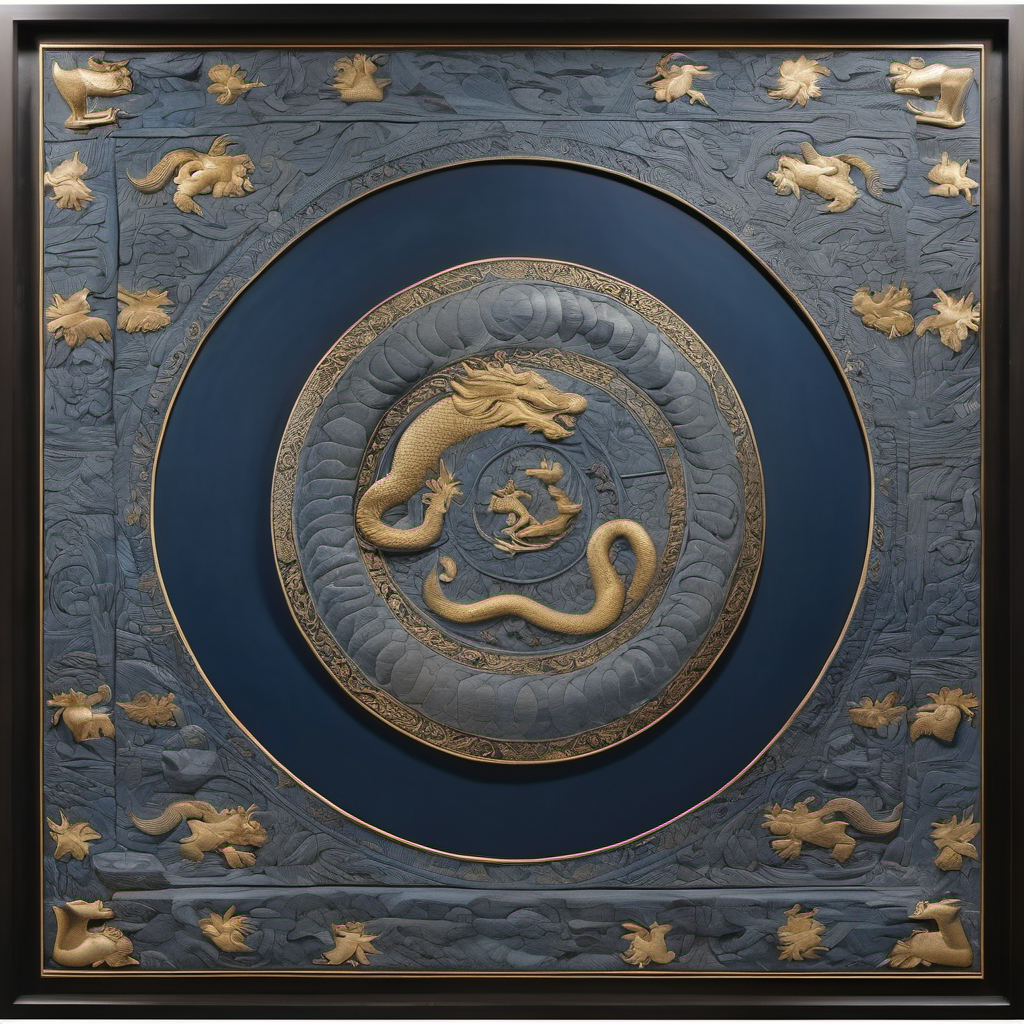
    Deep within the realms of Norse mythology lies a mysterious figure, shrouded in legend and mystique. The Midgard Serpent, also known as Jörmungandr, has captured the imagination of scholars and enthusiasts alike for centuries. This gargantuan sea monster, said to encircle the world, has been the subject of much speculation and interpretation.

    A Symbol of Chaos

    According to Norse mythology, the Midgard Serpent is often depicted as a massive snake, coiled around the Midgard, or the world. Its sheer size and malevolent nature make it a symbol of chaos and destruction. In this context, Jörmungandr represents the destructive forces that threaten the very fabric of existence.

    “The serpent’s coils are said to be so tight that if it were not for the gods’ intervention, the earth would long since have been crushed beneath its unyielding grip.” – Sturluson, Prose Edda

    A Representation of Evil

    As a symbol of evil, the Midgard Serpent is often associated with Loki, the trickster god, who is said to be the serpent’s father. This connection underscores the idea that Jörmungandr embodies the darkness and malevolence that lurks within the hearts of men.

    A Reflection of Humanity

    Beyond its role as a symbol of chaos and evil, the Midgard Serpent can also be seen as a reflection of humanity’s darker aspects. Its ability to encircle the world serves as a reminder of our own destructive tendencies and the need for self-reflection.

    “The serpent’s coils represent the constraints we place upon ourselves, and the only way to break free is through the power of self-knowledge.” – Neil Gaiman, American Gods

    The End of Days

    According to Norse mythology, the Midgard Serpent plays a pivotal role in the events leading up to Ragnarök, the apocalyptic end of days. As the world succumbs to destruction and chaos, Jörmungandr rises from the depths, its massive coils crushing the earth beneath.

    Conclusion

    In conclusion, the Midgard Serpent is a complex and multifaceted figure that has captivated the imagination of scholars and enthusiasts alike. Its representation in Norse mythology as a symbol of chaos, evil, and humanity’s darker aspects serves as a powerful reminder of our own destructive tendencies.

  • From the Ashes: Rebuilding Society after Ragnarök — Unpacking the Themes and Symbolism Behind the Aftermath

    From the Ashes: Rebuilding Society after Ragnarök — Unpacking the Themes and Symbolism Behind the Aftermath

    From the Ashes: Rebuilding Society after Ragnarök

    Ragnarök, the Norse apocalypse, is a catastrophic event that has captivated imagination for centuries. The aftermath of this cataclysmic disaster offers a unique lens through which to examine the themes and symbolism behind societal rebuilding.

    The Theme of Resilience

    • Embracing Chaos: In the wake of Ragnarök, humanity must confront the reality that their world has been destroyed. This newfound understanding of fragility can foster resilience and adaptability in the face of uncertainty.
    • A New Order Emerges: As society begins to rebuild, it becomes apparent that a new order will emerge from the ashes. This transformation offers opportunities for growth, renewal, and innovation.

    The Symbolism of Reconstruction

    • The Ides of Renewal: The mythological depiction of Ragnarök as a cyclical event, where the world is reborn from its own ashes, underscores the symbolism of reconstruction. This perpetual cycle represents the eternal quest for renewal and rejuvenation.
    • A Bridge Between Eras: The act of rebuilding serves as a metaphorical bridge between eras, connecting the past to the present while forging a path towards an uncertain future.

    “The world was born from the body of the giant Ymir, and so it will be reborn from the ashes of Ragnarök.” — Snorri Sturluson, The Prose Edda

    Lessons for Contemporary Society

    Ragnarök’s aftermath offers valuable lessons for contemporary society. As we face our own challenges and uncertainties, we can draw parallels between the themes and symbolism of societal rebuilding after Ragnarök:

    • Facing Uncertainty: The resilience required to rebuild in the wake of Ragnarök serves as a reminder that uncertainty is an inherent part of life. By embracing this uncertainty, we can foster a culture of adaptability and innovation.
    • A New Order Emerging: The mythological cycle of Ragnarök encourages us to view transformation not as destruction, but as opportunity for growth and renewal.

    As we reflect on the themes and symbolism behind the aftermath of Ragnarök, we are reminded that even in the darkest of times, there exists a profound capacity for resilience, adaptation, and rebirth. By embracing this cyclical nature of existence, we can forge a brighter future from the ashes of our own challenges.

    For further reading on the themes and symbolism behind Ragnarök, explore Smithsonian Magazine’s article.

  • Ragnarök: A Study of the Fates of the Gods — Exploring the End Times According to Norse Mythology

    Ragnarök: A Study of the Fates of the Gods — Exploring the End Times According to Norse Mythology

    Ragnarök: A Study of the Fates of the Gods — Exploring the End Times According to Norse Mythology

    As the sun sets over the frozen tundra, the whispers of the ancient Norse begin to echo through the ages. The tale of Ragnarök, a catastrophic event foretold by the gods themselves, has captivated scholars and enthusiasts alike. In this article, we will delve into the mystical realm of Norse mythology, exploring the end times as prophesied in the Poetic Edda and Prose Edda.

    The Beginning of the End

    According to Norse legend, the events leading up to Ragnarök began when the fire giant Surtur emerged from his slumber. His fiery presence signaled the start of the apocalypse, as the earth began to tremble and the skies grew dark.

    • “The earth shall break, the sea shall rush, the mountains shall shake.” – Völuspá, Poetic Edda
    • The fire giant Surtur’s flames will engulf the world, signaling the end of days.

    The Battle of Gods and Giants

    As the forces of chaos gathered to do battle with the gods, the very fabric of reality began to unravel. The mighty Thor, god of thunder, prepared for his final stand against the fire giant Surtur.

    “Thor shall die in the fight at Vígríðr; and there shall be great slaughter among the gods.”

    — Völuspá, Poetic Edda

    In this apocalyptic showdown, gods and giants clashed in a frenzy of steel and flame. The mighty Thor would ultimately meet his demise at the hands of Surtur’s flames, while the other gods fought valiantly to hold back the tide of destruction.

    The Fates of the Gods

    As the battle raged on, many of the gods fell victim to the cunning guile of their foes. Odin, All-Father and chief god of Asgard, would meet his end at the hands of Fenrir, the giant wolf. Freyja, goddess of love and beauty, would lose her necklace Brisingamen, a symbol of her power.

    • “Odin’s ravens shall fall silent, and Thor’s hammer shall be broken.” – Völuspá, Poetic Edda
    • The earth will sink into the sea, and the stars will fade from the sky.

    The Rebirth of Creation

    As the dust settled on the battlefield, a new era began to take shape. From the ashes of the old world, a new creation would arise. The survivors of Ragnarök would rebuild and begin anew, their legacy forged in the fires of destruction.

    • “The earth shall rise from the sea, the mountains shall grow once more.” – Völuspá, Poetic Edda
    • The new world would be free from the cycle of destruction and rebirth.

    As we conclude our exploration of Ragnarök, it becomes clear that this mythological event has captured the imagination of scholars and enthusiasts alike. The tale of the end times serves as a powerful reminder of the eternal cycle of creation and destruction, a testament to the enduring power of Norse mythology.

    Learn more about Ragnarök

  • The Power of the Runes: A Study of their Origins, Uses, and Significance in Norse Mythology

    The Power of the Runes: A Study of their Origins, Uses, and Significance in Norse Mythology

    The Power of the Runes: A Study of their Origins, Uses, and Significance in Norse Mythology

    • In the realm of ancient mythology, few symbols hold as much mystique as the runes. These mysterious marks have captivated scholars and enthusiasts alike, with their origins dating back to the earliest civilizations of Northern Europe.
    • According to mythologists, the runes were first inscribed on stone by the Goths around the 1st century AD, with some evidence suggesting their use as early as the 5th century BC. The runic alphabet consisted of 24 characters, each imbued with a unique power and significance.
    • As a tool for divination, writing, and magic, the runes held immense power in Norse culture. Odin, the All-Father, was said to have carved the runes on his staff, which he used to gain wisdom and insight into the mysteries of the universe.
    • “The runes are not mere signs or symbols,” noted scholar Jan de Vries once remarked, “but living forces that can be tapped by those who know how.”
    • In Norse mythology, the runes were said to hold the secrets of creation and destruction. They were believed to possess the power to shape fate, summoning good or evil as needed.
    • “The runes are the threads of destiny,” wrote medieval Icelandic scholar Snorri Sturluson in his famous tome, The Prose Edda. “With them, one can weave and shape the fabric of fate.”
    • Today, the power of the runes continues to captivate modern practitioners of magic and divination. Many modern Pagans and Wiccans incorporate rune readings into their spiritual practices, using the ancient symbols to gain insight and guidance in their daily lives.

    “The runes are a bridge between the past and the present, connecting us with our ancestors and the mysteries of the universe.” — Odin (as recorded in the Poetic Edda)

    Learn more about the history and significance of the runes on Wikipedia

  • Odin’s Army: Unpacking the Symbolism and Significance of his Retinue

    Odin’s Army: Unpacking the Symbolism and Significance of his Retinue

    Odin’s Army: Unpacking the Symbolism and Significance of his Retinue

    Odin, the All-Father in Norse mythology, is often depicted surrounded by a retinue of supernatural beings and creatures. This assembly of gods, giants, and otherworldly entities has captivated the imagination of scholars and enthusiasts alike, sparking numerous interpretations and analyses. In this article, we’ll delve into the symbolism and significance of Odin’s army, exploring its various components and the insights they offer into Norse mythology.

    The Wild Hunt

    Odin’s retinue is perhaps most famously associated with the Wild Hunt, a spectral procession of ghostly warriors led by the god himself. According to legend, the Wild Hunt traverses the skies and landscapes, driven by Odin’s charioteer, the giant Hildr. This image has been interpreted as a symbol of the afterlife, with the Wild Hunt serving as a precursor to the final judgment.

    “The Wild Hunt is a gathering of those who have died without being buried or cremated, and are doomed to ride eternally in search of rest.” — Snorri Sturluson, Prose Edda

    The Einherjar

    Among the most fascinating aspects of Odin’s retinue are the Einherjar, a company of fallen warriors who have died bravely in battle. These heroes are brought to Valhalla, the golden palace of the slain, where they join Odin’s army and prepare for the events of Ragnarök.

    • Famed Warriors: The Einherjar include legendary figures such as Sigurd, Beowulf, and other great heroes of Northern mythology.
    • Training and Battle: Under Odin’s guidance, the Einherjar engage in daily battles, known as “dying” or “falling,” only to be resurrected and continue their training. This cycle is said to refine their skills for the final battle of Ragnarök.
    • Asgardian Loyalty: The Einherjar remain fiercely loyal to Odin and the gods, serving as a symbol of loyalty and duty in Norse mythology.

    The Valkyries

    Odin’s retinue also includes the Valkyries, female figures who choose which warriors die in battle and select those worthy of joining the Einherjar. These women are often depicted as companions to the god, serving as his messengers and handmaidens.

    • Choosers of the Slain: The Valkyries decide which heroes will join Odin’s army, highlighting their importance in Norse mythology.
    • Messengers and Handmaidens: As companions to Odin, the Valkyries act as his agents, delivering messages and carrying out his will.

    The Jotun

    Odin’s retinue also includes the Jotun, giant entities that often serve as his adversaries. These powerful beings are said to possess great strength and magical abilities.

    • Mighty Beings: The Jotun embody the raw power of nature, reflecting the awe-inspiring majesty of the natural world.
    • Rivals and Allies: Depending on their role in Norse mythology, the Jotun can serve as rivals or allies to Odin’s army, highlighting the complexities of these relationships.

    In conclusion, Odin’s retinue is a rich tapestry of symbolism and significance, reflecting the values and themes of Norse mythology. From the Wild Hunt to the Einherjar, Valkyries, and Jotun, each component offers insights into the world of the gods and the human experience. As we continue to explore and interpret this fascinating mythology, we are reminded of the enduring power of these ancient stories to captivate and inspire us.

    Learn more about Odin and his retinue on Wikipedia.

    Explore the Prose Edda, a primary source of Norse mythology, at Project Gutenberg.

  • Valkyries as Psychopomps: Understanding their Roles as Guides to the Afterlife

    Valkyries as Psychopomps: Understanding their Roles as Guides to the Afterlife

    Valkyries as Psychopomps: Understanding their Roles as Guides to the Afterlife

    In Norse mythology, Valkyries are often misunderstood as simply being female figures who choose which warriors will die in battle and take them to Valhalla, the afterlife for fallen soldiers. However, a closer look at the myths reveals that these goddesses played a far more complex role, serving as psychopomps, guiding the spirits of the dead to their final destination.

    Ancient Origins
    The concept of psychopomp dates back to ancient civilizations, where mythological figures like Anubis in Egyptian mythology and Charon in Greek mythology were tasked with ferrying souls across rivers or into the afterlife. Similarly, the Valkyries, as depicted in the Poetic Edda and Prose Edda, acted as guides for the spirits of the dead.

    “The Valkyries are not just warriors’ wives, but also psychopomps, guiding the souls of those who die to Valhalla.” – John Lindow, Professor of Scandinavian Studies

    • Spiritual Guidance**: As psychopomps, Valkyries were responsible for comforting and guiding the spirits of the dead through the transition from life to death. This role required great compassion, wisdom, and understanding.
    • Selection of Souls**: The Valkyries’ role in selecting which warriors would die in battle and be taken to Valhalla is often misunderstood as being arbitrary or capricious. However, it’s more likely that they were guided by a deeper sense of justice, choosing those who had fulfilled their destined purpose.
    • Journey to Valhalla**: As the spirits of the dead arrived in Valhalla, Valkyries ensured their safe passage and introduction to the other heroes gathered there. This role required great knowledge of the afterlife and its workings.

    “The Valkyries are not just warriors’ wives, but also psychopomps, guiding the souls of those who die to Valhalla.” – John Lindow, Professor of Scandinavian Studies

    By examining the role of Valkyries as psychopomps, we gain a deeper understanding of their significance in Norse mythology. These powerful goddesses played a crucial part in shaping the fate of warriors and guiding them through the transition from life to death.
    Read more about the mythology and symbolism of the Valkyries: Wikipedia – Valkyrie

  • Unleashing the Fury of the Berserkers — The Psychology Behind their Frenzied Warriors

    Unleashing the Fury of the Berserkers — The Psychology Behind their Frenzied Warriors

    Unleashing the Fury of the Berserkers — The Psychology Behind their Frenzied Warriors

    In Norse mythology, the berserkers were fierce warriors known for their unparalleled ferocity in battle. But what drove these warriors to such extremes? And can we apply the psychology behind their frenzied behavior to modern-day conflicts?

    • Into the Fray: The Berserkers’ Rage
    • Ruthless and Unpredictable: The Psychology of the Berserkers
    • A Window into Human Nature: Lessons from the Berserkers

    “The berserker is a force to be reckoned with,” said Dr. Åke Hultkrantz, a renowned expert on Norse mythology. “Their unbridled fury was a manifestation of their deep connection to nature and their desire to tap into its primal power.”

    “They are fierce warriors who rush forward without armor or shield, biting their shields and eating raw flesh before the battle. They are like wild animals.”

    – The Poetic Edda, Norse mythology

    According to the myth, berserkers would enter a state of fury known as “berserking,” which was characterized by increased strength, speed, and aggression. This phenomenon is believed to be linked to the consumption of certain hallucinogenic mushrooms and other plants.

    Ruthless and Unpredictable

    The psychology behind the berserkers’ behavior is rooted in their primal connection to nature and their desire to tap into its raw power. By embracing their emotions and surrendering to their instincts, they were able to access a deep well of energy and aggression.

    “The berserkers were not just mindless killers,” said Dr. Hultkrantz. “They were spiritual warriors who believed that by unleashing their fury, they could connect with the raw power of nature and tap into its limitless potential.”

    A Window into Human Nature

    Despite being rooted in mythology, the psychology behind the berserkers’ behavior offers valuable insights into human nature. By examining the motivations and actions of these frenzied warriors, we can gain a deeper understanding of our own primal urges and the role they play in shaping our lives.

    “The berserkers may seem like mythological aberrations,” said Dr. Hultkrantz, “but their story offers a powerful reminder of the importance of embracing our emotions and connecting with the natural world.”

    For more information on Norse mythology and the psychology behind the berserkers, check out the Mythology Institute’s comprehensive guide.

  • Freyja’s Necklace: A Symbol of Love, Beauty, and Power — Exploring its Significance in Norse Mythology

    Freyja’s Necklace: A Symbol of Love, Beauty, and Power — Exploring its Significance in Norse Mythology

    Freyja’s Necklace: A Symbol of Love, Beauty, and Power — Exploring its Significance in Norse Mythology

    In Norse mythology, Freyja’s necklace, also known as Brisingamen, is a revered symbol of love, beauty, and power. This exquisite treasure was said to have been crafted by the dwarves and possessed magical properties that made it highly coveted by the gods.

    A Necklace Fit for a Goddess

    Freyja, the goddess of love, fertility, war, and death, wore Brisingamen as a symbol of her status and power. According to myth, she obtained the necklace after outbidding the other goddesses with its value in exchange for the right to wear it. As the most beautiful and charming of the gods’ daughters, Freyja’s possession of the necklace solidified her position as the embodiment of love and beauty.

    “Freyja is often depicted wearing Brisingamen, which is said to have the power to control the hearts of men.” — John Lindow, Norse Mythology

    • Magical Properties: The necklace was believed to possess the power to influence the fates of warriors and their loved ones. It could also grant the wearer protection from harm and ensure their victory in battle.
    • Symbolism: Brisingamen serves as a symbol of love, beauty, and fertility, reflecting Freyja’s roles as a goddess of love and fertility. Its power to control hearts and influence fate highlights her position as the goddess of love and war.
    • Cultural Significance: The necklace has cultural significance beyond its mythological context. It represents the values placed on beauty, love, and power in Norse society, reflecting the importance of these qualities in everyday life.

    Today, Freyja’s necklace remains an important symbol in modern paganism and neo-paganism, representing the power of love, beauty, and femininity. Its significance extends beyond its mythological context, serving as a reminder of the importance of these values in our own lives.

    For more information on Norse mythology and the symbolism of Freyja’s necklace:

    * Wikipedia: Freyja
    * Norse Mythology: Freyja

  • The Importance of Jotunheim in Norse Mythology — Unpacking its Significance and Role

    The Importance of Jotunheim in Norse Mythology — Unpacking its Significance and Role

    The Importance of Jotunheim in Norse Mythology — Unpacking its Significance and Role

    Norse mythology is a rich tapestry of gods, goddesses, giants, and otherworldly beings. At the heart of this mythological universe lies the realm of Jotunheim, home to the giants or jotuns. In this article, we’ll delve into the significance and role of Jotunheim in Norse mythology.

    What is Jotunheim?

    Jotunheim is one of the nine worlds that make up the cosmos in Norse mythology. It’s a realm inhabited by giants, also known as jotuns or trolls. The name “Jotunheim” translates to “the home of the giants.” This world is often depicted as a dark and foreboding place, filled with treacherous terrain and malevolent creatures.

    Significance in Norse Mythology

    • Conflict and Chaos**: Jotunheim plays a crucial role in many Norse myths, often serving as the source of conflict and chaos. The giants are frequently at odds with the Aesir gods, leading to wars and upheaval.
    • Misconceptions and Fears**: The realm of Jotunheim is also associated with misconceptions and fears. In Norse mythology, the giants are often seen as monstrous and evil, embodying humanity’s deep-seated fears and anxieties.
    • Balance and Harmony**: Interestingly, Jotunheim also represents a balance between chaos and order. The giants’ constant struggle against the gods serves to maintain harmony in the cosmos, preventing any one force from becoming too powerful.

    Role of Jotunheim in Norse Mythology

    Jotunheim’s role in Norse mythology is multifaceted:

    • Gods and Giants**: The realm serves as the backdrop for many mythological stories featuring gods and giants. The most famous tale is probably that of Thor, who descended into Jotunheim to reclaim his stolen hammer.
    • The End of Days**: Jotunheim plays a key role in the events leading up to Ragnarok, the Norse apocalypse. According to myth, the giants will join forces with otherworldly beings to bring about the end of the world.
    • Symbolism and Themes**: Jotunheim is also rich in symbolism and themes. The realm represents the unknown, the dark, and the mysterious aspects of human nature.

    Conclusion

    In conclusion, Jotunheim occupies a pivotal position in Norse mythology, embodying both conflict and harmony. As we continue to explore the realms of this ancient mythological world, we’re reminded of the importance of balance and the power of our deepest fears and anxieties.

    “The gods are at odds with the giants because they are the enemies of order.” – Norse Mythology by Neil Gaiman

    For more information on Norse mythology, visit the Wikipedia page.