Author: editor

  • Christianity vs Buddhism: A Comparative Analysis of Two Major Religions

    Christianity vs Buddhism: A Comparative Analysis of Two Major Religions

    Christianity vs Buddhism: A Comparative Analysis of Two Major Religions

    As two of the most influential and widespread religions in the world, Christianity and Buddhism have shaped the lives of billions of people across cultures and continents. While both share some commonalities, they also exhibit distinct differences in their teachings, practices, and core beliefs. In this article, we will delve into a comparative analysis of these two major religions, exploring their similarities and divergences.

    **Origins**

    “The truth will set you free.” – Jesus Christ (John 8:32)

    Christianity originated from the life, teachings, death, and resurrection of Jesus Christ, who is considered the Son of God. The Christian faith is based on the principles of love, compassion, and redemption through faith in Jesus Christ.

    “The mind is everything; what you think, you become.” – Buddha

    Buddhism, founded by Siddhartha Gautama (the Buddha), emerged from ancient India around 500 BCE. It emphasizes the attainment of enlightenment (Nirvana) through individual spiritual practices, self-reflection, and the cultivation of wisdom.

    **Core Beliefs**

    • God: Christianity posits the existence of a triune God – Father, Son, and Holy Spirit. Buddhism rejects the concept of an omniscient deity, instead focusing on the individual’s potential for enlightenment.
    • Salvation: Christianity emphasizes salvation through faith in Jesus Christ, while Buddhism seeks liberation from suffering through the cultivation of wisdom and compassion.

    **Practices**

    • Rituals: Christianity observes various sacraments, such as baptism, communion, and confirmation. Buddhism practices meditation (Dhyana), yoga, and chanting (Mantras) to facilitate spiritual growth.
    • Scriptures: Christianity relies on the Bible as its primary scripture. Buddhism draws from a wide range of texts, including the Pali Canon, Mahayana sutras, and Tibetan Tantric texts.

    **Ethics**

    • Morality: Both religions emphasize the importance of moral conduct, with Christianity basing its ethics on the Ten Commandments. Buddhism adheres to principles such as Ahimsa (non-violence) and Karuna (compassion).
    • Virtue: Christianity values virtues like humility, kindness, and forgiveness. Buddhism places great emphasis on the cultivation of wisdom, self-discipline, and compassion.

    **Conclusion**

    In conclusion, while Christianity and Buddhism share some commonalities in their emphasis on ethics and spiritual growth, they differ significantly in their teachings, practices, and core beliefs. This comparative analysis highlights the unique features of each religion, encouraging a deeper understanding and respect for these two major world religions.

    Read more about the similarities and differences between Christianity and Buddhism:

    * “The Dalai Lama’s Take on Christianity” by The New York Times
    * “What Christians Can Learn from Buddhism” by Patheos

    Explore the original texts and teachings of each religion:

    * The Bible (Christianity)
    * The Pali Canon (Buddhism)

    Reflect on the wisdom and insights offered by these two major religions, and consider how they might intersect with your own beliefs and values.
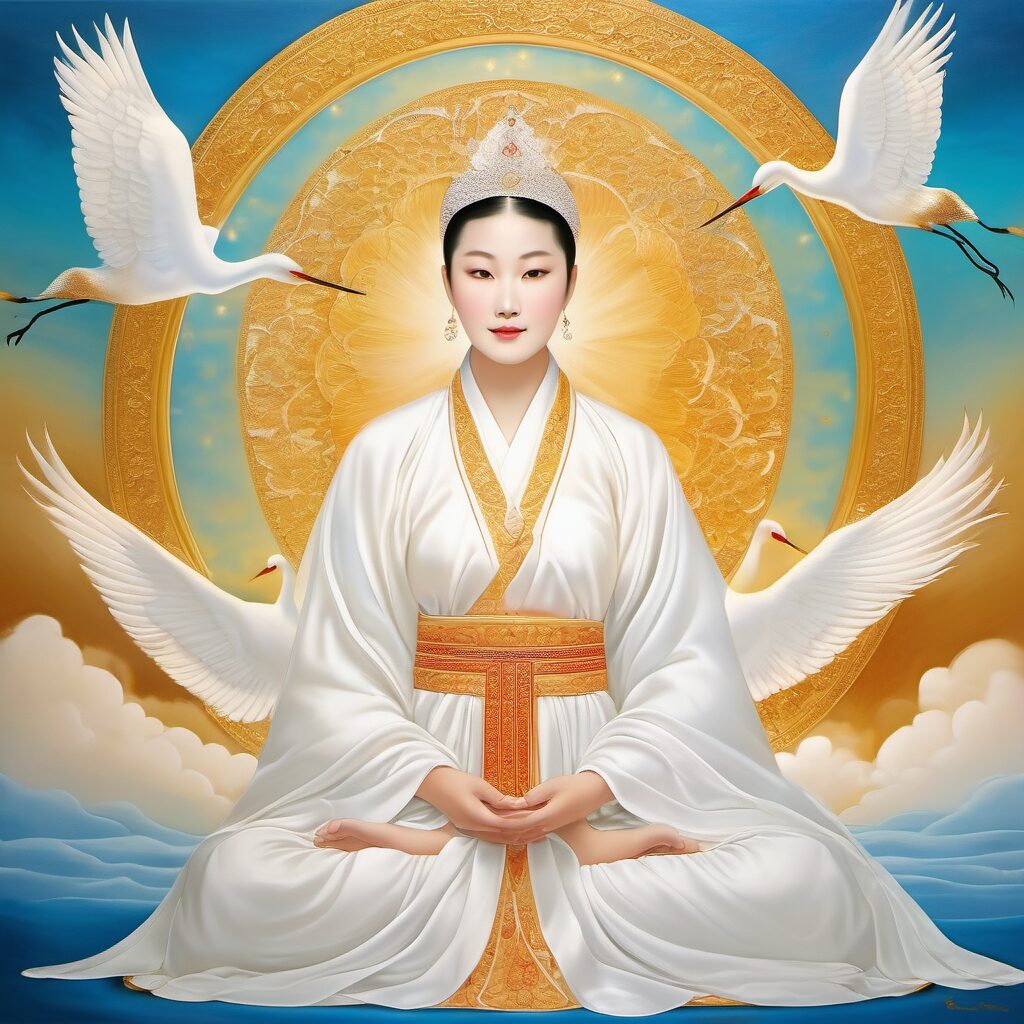
  • Logos vs Tao: A Philosophical Dialogue between Christianity and Eastern Thought

    Logos vs Tao: A Philosophical Dialogue between Christianity and Eastern Thought

    Logos vs Tao: A Philosophical Dialogue between Christianity and Eastern Thought

    The philosophical traditions of Christianity and Eastern thought have often been seen as distinct and separate, with little overlap or dialogue between them. However, a closer examination of these two intellectual currents reveals fascinating parallels and contrasts that can shed new light on our understanding of the nature of reality.

    At the heart of Christian philosophy lies the concept of Logos, the divine Word through which God created the universe. As described in John’s Gospel (John 1:1-3), “In the beginning was the Word, and the Word was with God, and the Word was God. All things were made through him, and without him was not anything made that was made.” This notion of a divine, creative principle is central to Christian theology.

    In contrast, Eastern thought, particularly Taoist philosophy, emphasizes the concept of Tao, or the “Way,” which represents the ultimate reality beyond human comprehension. As Lao Tzu wrote in the Tao Te Ching (Chapter 25), “Nature does not hurry, yet everything is accomplished.” This idea of a harmonious, self-sustaining universe governed by natural laws is fundamental to Taoist thought.

    One key difference between Logos and Tao lies in their roles within their respective systems. The Logos is often seen as an active, creative force that shapes the world, whereas the Tao is typically depicted as a passive, receptive principle that allows things to unfold naturally. This contrast can be seen in the following quote from Christian mystic Meister Eckhart: “The Father says to his Son, ‘You are my beloved Son; with you I am well pleased.’ Thus the Logos speaks its own wisdom.”

    In response, Taoist philosopher Chuang Tzu might say: “I do not know whether I was then dreaming or awake. But I think it was a dream.” Here, we see the Tao as an underlying reality that transcends human understanding and egoic constructions.

    Despite these differences, both Logos and Tao share a common thread in their emphasis on the interconnectedness of all things. As Jesus said in Matthew 22:37-40, “Love the Lord your God with all your heart and with all your soul and with all your mind. This is the greatest commandment.” Similarly, the Taoist text, the I Ching (Hexagram 21), advises: “The yielding energy is like water; it always flows downward.”

    This convergence of Logos and Tao can be seen in the concept of non-dualism, which posits that all distinctions between subject and object, self and other, are ultimately illusory. As Christian mystic St. Thomas Aquinas wrote: “God is not a being among beings, but Being itself.” In similar fashion, the Taoist text, the Chuang Tzu (Chapter 12), states: “The sage does not identify with any particular thing; therefore, he can be in harmony with all things.”

    In conclusion, the philosophical dialogue between Christianity and Eastern thought, as represented by Logos and Tao, offers a rich tapestry of insights into the nature of reality. While differences certainly exist, the shared emphasis on interconnectedness and non-dualism suggests a deeper unity underlying these seemingly disparate intellectual traditions.

    Recommended Reading:

    • “The Gospel of John” by C. H. Dodd: A classic commentary on the Gospel that explores the concept of Logos.
    • Tao Te Ching translated by Gia-fu Feng and Jane English: A widely read and respected translation of this foundational Taoist text.
    • “Chuang Tzu: Basic Writings translated by Francis H. Cook and David L. Hall: A comprehensive collection of Chuang Tzu’s teachings.
    • “Summa Theologica” by St. Thomas Aquinas: A classic work of Christian philosophy that explores the nature of God and reality.

    Further Exploration:

    “The Tao is like a great river; it flows, yet remains constant. It is the source of all things, and to which all things return.” — Chuang Tzu

    Explore more articles on philosophy, spirituality, and Eastern thought at [Your Website URL].

  • Faith vs Reason: Can Science and Spirituality Coexist?

    Faith vs Reason: Can Science and Spirituality Coexist?

    Faith vs Reason: Can Science and Spirituality Coexist?

    The age-old debate between faith and reason has been a longstanding topic of discussion among scholars, scientists, and spiritual seekers alike. As we navigate the complexities of modern life, it’s essential to explore whether science and spirituality can coexist in harmony.

    • The Tension Between Faith and Reason
      • Philosopher Blaise Pascal once said, “The heart has its reasons which reason does not know.” This quote highlights the fundamental tension between faith and reason. While reason seeks to understand the world through empirical evidence and logical analysis, faith often relies on intuition, emotions, and personal experience.

    One of the most prominent thinkers who grappled with this tension was Immanuel Kant. In his groundbreaking work “Critique of Pure Reason,” Kant argued that while reason is essential for understanding the world, it is limited by our cognitive biases and sensory perceptions. He believed that faith must necessarily play a role in supplementing our rational inquiry.

    • The Rise of Spiritual Science
      • In recent years, we’ve seen a resurgence of interest in spiritual science, which seeks to integrate scientific inquiry with spiritual and philosophical perspectives. This movement is often attributed to the work of pioneers like Rudolf Steiner and Pierre Teilhard de Chardin.

    Steiner’s concept of “anthroposophy” posits that human beings possess a unique capacity for spiritual perception, which can be cultivated through meditation and introspection. Similarly, Teilhard de Chardin’s notion of the “Omega Point” suggests that humanity is evolving towards a higher level of consciousness, where science and spirituality will converge.

    • The Role of Intuition in Scientific Discovery
      • A growing body of research suggests that intuition plays a significant role in scientific discovery. For example, the physicist Max Planck once said, “The meaningful world is not just a product of our own imagination or our senses; it is also something which exists independently of us.” This quote highlights the importance of intuition in grasping the underlying structure of reality.

    As we delve deeper into the mysteries of the universe, it’s becoming increasingly clear that science and spirituality are not mutually exclusive. In fact, many scientists have reported experiencing moments of profound insight or inspiration that can’t be fully explained by rational inquiry alone.

    • Conclusion: Harmony Between Science and Spirituality
      • In conclusion, while the debate between faith and reason will undoubtedly continue, it’s essential to recognize the value of both perspectives. By embracing the tensions between science and spirituality, we may unlock new insights and discoveries that transcend our current understanding.
      • As Albert Einstein so eloquently put it, “The important thing is not to stop questioning. Curiosity has its own reason for existence.” By nurturing this curiosity, we can create a harmonious balance between science and spirituality, leading us towards a deeper understanding of the world and our place within it.

    “Science is a way of thinking much more than it is a body of knowledge. It’s a way of thinking that allows you to ask questions.” – Carl Sagan

    Learn more about the intersection of science and spirituality:

    * Rudolf Steiner’s work on anthroposophy: https://www.rsarchive.org/
    * Pierre Teilhard de Chardin’s concept of the Omega Point: https://en.wikipedia.org/wiki/Omega_Point
    * Max Planck’s quote on intuition in scientific discovery: https://www.goodreads.com/quote/1363542-the-meaningful-world-is-not-just-a-product-of
    * Albert Einstein’s quote on curiosity: https://en.wikiquote.org/wiki/Albert_Einstein

  • Icons vs Statues: Theological Musings on Christian Art

    Icons vs Statues: Theological Musings on Christian Art

    Icons vs Statues: Theological Musings on Christian Art

    The realm of Christian art is replete with various forms and mediums, each carrying its own theological significance. Two prominent examples that have sparked intense debate among scholars and enthusiasts are icons and statues. In this article, we will delve into the history, theology, and cultural implications behind these two forms of Christian art.

    Icons: A Window to the Divine

    For Eastern Orthodox Christians, icons occupy a revered place in their liturgical and devotional practices. These two-dimensional images are considered windows to the divine, offering a glimpse into the sacred realm. As St. John Damascene so eloquently put it, “The honor paid to an icon is transferred to the prototype” (De Fide Orthodoxa, Book IV, Chapter 3). This notion underscores the concept of iconic theology, where the image serves as a mediator between the viewer and the divine.

    Avoiding Idolatry

    A crucial aspect of icon veneration is avoiding idolatry. The early Church Fathers emphasized the importance of distinguishing between the material representation (the icon) and the divine reality it depicts. This distinction is encapsulated in the phrase “not worshipping the image, but the prototype which the image represents” (Cyril of Alexandria, Letter to Nestorius). By avoiding idolatry, icons become a means of contemplation and meditation, rather than objects of worship.

    Statues: A Tangle of Theology and Aesthetics

    In contrast, statues have been a part of Western Christian art since the early Middle Ages. These three-dimensional figures often took the form of saints, angels, or biblical characters, serving as devotional aids and decorative elements in churches and monasteries. However, their theological significance has been subject to debate.

    Theological Ambiguity

    Theological debates surrounding statues revolve around the issue of realism. Did the statue represent a symbolic or literal depiction of the divine? The Council of Trent (1545-1563) addressed this concern by affirming that statues and other forms of Christian art were meant to “represent the truth, not merely to please the eye” (Session 22, Chapter 6). This ambiguity has led some to question the theological efficacy of statues, while others see them as valuable devotional tools.

    Theological Reflections

    In conclusion, icons and statues represent two distinct approaches to Christian art. While both have their own theological significance, it is essential to recognize the historical and cultural contexts that gave rise to each. As we navigate these complex issues, we would do well to heed the words of St. Basil the Great: “The aim of sacred images is not to deceive the eyes, but to elevate the soul” (Letter 93).

    Recommended Readings

    * St. John Damascene. De Fide Orthodoxa. Book IV, Chapter 3.
    * Cyril of Alexandria. Letter to Nestorius.
    * Council of Trent. Session 22, Chapter 6.

    For further exploration and theological musings on Christian art, consider the following resources:

    * The Icon: A Window to the Divine by Timothy Ware
    * Theology and Art in the Western Tradition edited by James F. Harris
    * Christian Art and Architecture by George Ferguson

  • Early Church Fathers and Their Wisdom — A Study in Christian History

    Early Church Fathers and Their Wisdom — A Study in Christian History

    Early Church Fathers and Their Wisdom — A Study in Christian History

    The early Church Fathers played a crucial role in shaping the doctrine, practices, and traditions of Christianity. These influential leaders left behind a rich legacy of writings, teachings, and spiritual insights that continue to inspire and guide Christians today.

    • Origins of Christian Theology: The Early Church Fathers were instrumental in developing Christian theology. They drew upon the wisdom of Jewish Scripture, Greek philosophy, and Roman law to create a comprehensive understanding of God’s nature and human salvation.
    • “The most important thing is not what we believe, but that we believe something.” — Tertullian (c. 155-240 AD)

    The Church Fathers’ writings were characterized by their emphasis on the authority of Scripture, the importance of tradition, and the value of reason in understanding divine mysteries. Their works have had a lasting impact on Christian thought and continue to influence theology, liturgy, and spiritual practices.

    “The Holy Spirit is indeed the master teacher of all who are devoted to the truth.” — Clement of Alexandria (c. 150-215 AD)

    • Patristic Legacy: The Early Church Fathers’ teachings have been passed down through the centuries, shaping the development of Christian doctrine and practice. Their writings continue to be studied and revered by Christians around the world.
    • Learn more about Patristics

    The study of Early Church Fathers offers valuable insights into the history, theology, and spiritual practices of Christianity. Their wisdom continues to inspire and guide Christians today, providing a rich understanding of the Christian faith.

  • Early Church Fathers and Their Wisdom — A Study in Christian History

    Early Church Fathers and Their Wisdom — A Study in Christian History

    Early Church Fathers and Their Wisdom — A Study in Christian History

    The Early Church Fathers, a group of influential Christian leaders who lived from approximately 100 to 400 CE, played a crucial role in shaping the foundations of Christianity. These wise men, who included prominent figures such as Justin Martyr, Origen, and Augustine, left behind a wealth of knowledge, wisdom, and theological insights that continue to inspire and guide Christians today.

    The Early Church Fathers’ Contribution

    As the Christian church began to take shape in the early centuries, these Church Fathers played a vital part in clarifying and defending the faith. They did so by writing extensively on theological topics, engaging in debates with other philosophers and religious leaders, and establishing a unified doctrine that would guide the church for generations to come.

    • Justin Martyr, one of the most influential Early Church Fathers, was a tireless defender of Christianity. In his famous apologetic work, “First Apology,” Justin argued that Christianity was not only compatible with Greek philosophy but also superior to it.
    • Origen, a renowned scholar and biblical interpreter, wrote extensively on the nature of God, the Trinity, and the meaning of scripture. His works continue to be studied by scholars today.
    • Augustine, one of the most important Christian thinkers of all time, wrote influential works such as “Confessions” and “The City of God.” His theological insights had a profound impact on Western Christianity.

    The Early Church Fathers’ Legacy

    The wisdom and teachings of the Early Church Fathers continue to shape Christian theology, liturgy, and tradition. Their writings have influenced generations of theologians, reformers, and saints alike.

    “It is a great thing for us that we are not left without a guide, nor without a teacher; but that we have the Spirit, the Father, and His word, which is more than all teaching.” — St. Justin Martyr

    Their legacy can be seen in:

    • The development of Christian doctrine, particularly in areas such as the Trinity, the nature of Christ, and the sacraments.
    • The establishment of a unified liturgy and worship practice across the early church.
    • The formation of monasticism and the rise of contemplative spirituality.

    Conclusion

    The Early Church Fathers were a group of visionary leaders who played a pivotal role in shaping the course of Christian history. Their wisdom, teachings, and writings continue to inspire and guide Christians today. As we seek to deepen our understanding of Christianity, it is essential that we study the works and legacy of these wise men.

    Learn more about the Early Church Fathers and explore their influential writings for yourself.

  • Baptism Meaning: A Deep Dive into Christian Initiation

    Baptism Meaning: A Deep Dive into Christian Initiation

    Baptism Meaning: A Deep Dive into Christian Initiation

    The sacrament of baptism is a cornerstone of Christian initiation, symbolizing the cleansing and renewal of an individual’s spirit. In this article, we’ll delve into the significance of baptism, its historical context, and explore the various interpretations that have shaped the practice over time.

    • Initiation into Christ: Baptism is often seen as a rite of passage, marking an individual’s entrance into the Christian community. This understanding emphasizes the importance of belonging to the body of Christ and being part of God’s kingdom.
    • A Symbolic Washing Away: In biblical accounts, baptism is depicted as a form of spiritual cleansing, where sins are washed away through Jesus’ sacrifice. This interpretation highlights the transformative power of faith in Christ.
    • Immersion and Resurrection: The act of immersion, often associated with baptism, can be seen as a symbol of death and resurrection. As believers descend into the water, they’re representing their old selves being buried, only to rise again, reborn in Christ.

    “For all have sinned and fall short of the glory of God” (Romans 3:23). This realization sets the stage for the need of spiritual cleansing, which baptism provides.

    In the early Christian Church, baptism was typically reserved for adults who had made a conscious decision to follow Jesus. As the faith spread and the Church grew, the practice evolved to include infants and young children. Today, baptism is a sacrament that can be administered at various stages of life, often seen as a symbol of welcome and inclusion into the Christian family.

    While the meaning of baptism has been debated throughout history, its essence remains rooted in the biblical accounts and early Church practices. As we continue to explore the depths of this sacrament, let us not forget the powerful words of Jesus: “Whoever believes in me shall have eternal life” (John 3:36). Baptism is a tangible representation of that eternal life, as individuals embark on a journey with Christ.

    As you reflect on the meaning of baptism, consider the significance it holds for you and your faith community. How has this sacrament shaped your understanding of salvation and your relationship with God?

    Explore Further:

  • Orthodox vs Catholic: What’s the Difference? — A Brief History of Christian Division

    Orthodox vs Catholic: What’s the Difference? — A Brief History of Christian Division

    Orthodox vs Catholic: What’s the Difference? — A Brief History of Christian Division

    As Christians, it is essential to understand the differences between various branches of Christianity. In this article, we will explore the history and main beliefs of Orthodox and Catholic Christianity, examining what sets these two major denominations apart.

    A Brief History of Christian Division

    The earliest divisions within Christianity arose in the 1st century, with the apostles themselves experiencing disagreements (Acts 15:7-9). However, the primary split occurred in the 5th century when Eastern and Western Christianities diverged. This division was largely a result of the Great Schism of 1054 CE, which saw the Roman Catholic Church and the Orthodox Church part ways.

    Key Differences

    1. Apostolic Succession:

    • Catholic Church: Emphasizes the importance of apostolic succession, where bishops are seen as direct descendants from the original apostles.
    • Orthodox Church: Places greater emphasis on the Holy Spirit’s role in guiding the Church, rather than relying solely on human succession.

    2. Eucharistic Theology:

    • Catholic Church: Teaches transubstantiation, where the bread and wine are transformed into the literal body and blood of Christ.
    • Orthodox Church: Believes in consubstantiation, stating that Jesus is present alongside the bread and wine.

    3. Papal Authority:

    • Catholic Church: Recognizes the Pope as the supreme authority on earth, with absolute power to govern the Church.
    • Orthodox Church: Does not recognize papal supremacy, instead emphasizing collective decision-making among bishops and patriarchs.

    4. Liturgical Practices:

    • Catholic Church: Utilizes the Latin Mass and various Western liturgical traditions.
    • Orthodox Church: Observes the Byzantine Rite, characterized by chanting, icons, and elaborate rituals.

    Famous Quotes and Insights

    “The Catholic Church has been for centuries the most systematical [sic] enemy of every movement which aimed at liberating people from their ignorance and servitude.” – Friedrich Nietzsche

    As Christianity continues to evolve, it is crucial for us to understand the historical context surrounding these divisions. By recognizing the unique characteristics of Orthodox and Catholic denominations, we can foster greater appreciation and respect for our shared Christian heritage.

    Learn More:

    * “The Orthodox Church: An Introduction” by Metropolitan Kallistos Ware
    * This Rock Magazine’s article on Catholic unity

  • Ascetic Practice in Today’s World — A Counterintuitive Approach to Spiritual Success

    Ascetic Practice in Today’s World — A Counterintuitive Approach to Spiritual Success

    Ascetic Practice in Today’s World — A Counterintuitive Approach to Spiritual Success

    In today’s fast-paced, technology-driven world, it may seem counterintuitive to talk about ascetic practice as a means to spiritual success. Many of us are used to indulging in comforts and conveniences that make our lives easier and more enjoyable. However, some of the most ancient and wise traditions have always emphasized the importance of simplicity, self-denial, and detachment as a path to inner growth and enlightenment.

    “The world is the palace of God; and the body is the temple of the Holy Spirit.”

    — St. Macarius of Egypt

    What does it mean to practice asceticism in today’s world? It’s not about giving up all your possessions, nor is it about living like a monk or nun. Rather, it’s about cultivating a deeper sense of inner poverty and detachment from worldly desires.

    • Renounce attachments**: Recognize that true fulfillment doesn’t come from external sources such as material possessions, relationships, or social status.
    • Lose yourself in service**: Instead of seeking to gain power, recognition, or control, focus on serving others and contributing to the greater good.
    • Embrace simplicity**: Let go of unnecessary clutter, distractions, and commitments that consume your time and energy.
    • Foster inner silence**: Cultivate a quiet mind through meditation, prayer, or other forms of contemplative practice.

    So why would anyone want to adopt such an approach? The benefits are numerous:

    * You’ll cultivate a sense of inner peace, freedom, and contentment that’s not dependent on external circumstances.
    * You’ll develop greater self-awareness, discipline, and resilience in the face of challenges.
    * You’ll build stronger, more meaningful relationships with others based on mutual service and respect.
    * You’ll gain a deeper understanding of yourself and the world around you.

    It’s not always easy, but it is worth it. As the ancient wisdom reminds us:

    “The kingdom of heaven suffers violence, and the violent take it by force.”

    — Jesus Christ

    Take the first step today towards embracing a counterintuitive approach to spiritual success. Let go of what holds you back and discover the transformative power of ascetic practice.

    Sources:
    * St. Macarius of Egypt: Wikipedia
    * Jesus Christ: Matthew 11:12 (ESV)

  • The Power of Fasting Discipline: A Guide to Spiritual Growth

    The Power of Fasting Discipline: A Guide to Spiritual Growth

    The Power of Fasting Discipline: A Guide to Spiritual Growth

    Fasting has been a long-standing practice in many spiritual traditions, and for good reason. By denying ourselves physical sustenance, we create an opportunity for our spirits to grow stronger and more focused. In this article, we’ll explore the power of fasting discipline as a means to achieving greater spiritual growth.

    What is Fasting Discipline?

    Fasting discipline is not just about abstaining from food or drink; it’s about developing self-control and mindfulness. When we fast, we’re forced to confront our own limitations and vulnerabilities. We must rely on our inner strength and resilience to get through the day without the comfort of food.

    As the ancient Greek philosopher Aristotle said, “We are what we repeatedly do. Excellence then is not an act, but a habit.” Fasting discipline helps us build habits that lead to spiritual growth.

    Benefits of Fasting Discipline

    1. Purification of Body and Soul
    Fasting allows our bodies to rid themselves of toxins and impurities, while also purifying our souls from negative thoughts and emotions.
    2. Increased Focus and Concentration
    By denying ourselves physical sustenance, we’re forced to focus on the present moment and let go of distractions.
    3. Greater Self-Awareness
    Fasting discipline helps us develop a deeper understanding of our own thoughts, emotions, and behaviors.

    Types of Fasting Disciplines

    • Water Fasting: Abstaining from all food and drink for a period of time.
    • Fruit Fasting: Consuming only fruits and vegetables for a specified duration.
    • Kayak Fasting: Abstaining from solid foods, but allowing yourself to consume liquids like tea or coffee.

    Getting Started with Fasting Discipline

    Before starting any fasting discipline, it’s essential to:

    1. Consult with a healthcare professional, especially if you have any underlying health conditions.
    2. Set realistic goals and start with shorter periods of fasting (e.g., 12 hours).
    3. Stay hydrated by drinking plenty of water or other liquids.

    Conclusion

    Fasting discipline is a powerful tool for spiritual growth. By embracing self-control, mindfulness, and purification, we can tap into our inner strength and develop a deeper connection with ourselves and the world around us. As the ancient mystic Sufi said, “The universe has no limits, but you do.” Fasting discipline is an opportunity to break free from those limitations and unlock your true potential.

    “The greatest glory in living lies not in never falling, but in rising every time we fall.” — Nelson Mandela

    For more information on fasting disciplines and spiritual growth, check out these resources:

    * Fasting App: A comprehensive guide to various types of fasting disciplines.
    * Scientific Study on Fasting and Autophagy: An in-depth look at the benefits of fasting for our physical and mental well-being.

    Remember, the power of fasting discipline lies not just in abstaining from food, but in cultivating self-awareness, resilience, and spiritual growth.