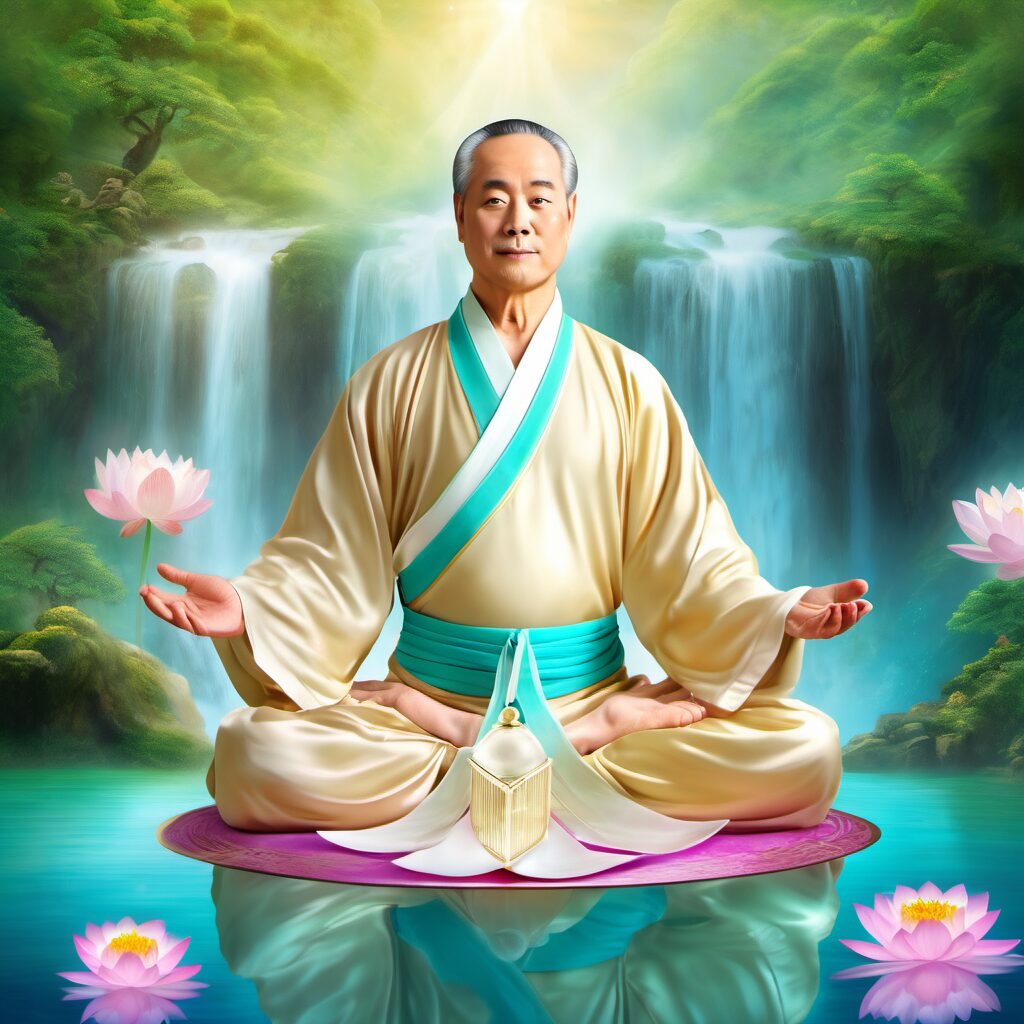
Logos vs Tao: A Philosophical Dialogue between Christianity and Eastern Thought
The philosophical traditions of Christianity and Eastern thought have often been seen as distinct and separate, with little overlap or dialogue between them. However, a closer examination of these two intellectual currents reveals fascinating parallels and contrasts that can shed new light on our understanding of the nature of reality.
At the heart of Christian philosophy lies the concept of Logos, the divine Word through which God created the universe. As described in John’s Gospel (John 1:1-3), “In the beginning was the Word, and the Word was with God, and the Word was God. All things were made through him, and without him was not anything made that was made.” This notion of a divine, creative principle is central to Christian theology.
In contrast, Eastern thought, particularly Taoist philosophy, emphasizes the concept of Tao, or the “Way,” which represents the ultimate reality beyond human comprehension. As Lao Tzu wrote in the Tao Te Ching (Chapter 25), “Nature does not hurry, yet everything is accomplished.” This idea of a harmonious, self-sustaining universe governed by natural laws is fundamental to Taoist thought.
One key difference between Logos and Tao lies in their roles within their respective systems. The Logos is often seen as an active, creative force that shapes the world, whereas the Tao is typically depicted as a passive, receptive principle that allows things to unfold naturally. This contrast can be seen in the following quote from Christian mystic Meister Eckhart: “The Father says to his Son, ‘You are my beloved Son; with you I am well pleased.’ Thus the Logos speaks its own wisdom.”
In response, Taoist philosopher Chuang Tzu might say: “I do not know whether I was then dreaming or awake. But I think it was a dream.” Here, we see the Tao as an underlying reality that transcends human understanding and egoic constructions.
Despite these differences, both Logos and Tao share a common thread in their emphasis on the interconnectedness of all things. As Jesus said in Matthew 22:37-40, “Love the Lord your God with all your heart and with all your soul and with all your mind. This is the greatest commandment.” Similarly, the Taoist text, the I Ching (Hexagram 21), advises: “The yielding energy is like water; it always flows downward.”
This convergence of Logos and Tao can be seen in the concept of non-dualism, which posits that all distinctions between subject and object, self and other, are ultimately illusory. As Christian mystic St. Thomas Aquinas wrote: “God is not a being among beings, but Being itself.” In similar fashion, the Taoist text, the Chuang Tzu (Chapter 12), states: “The sage does not identify with any particular thing; therefore, he can be in harmony with all things.”
In conclusion, the philosophical dialogue between Christianity and Eastern thought, as represented by Logos and Tao, offers a rich tapestry of insights into the nature of reality. While differences certainly exist, the shared emphasis on interconnectedness and non-dualism suggests a deeper unity underlying these seemingly disparate intellectual traditions.
Recommended Reading:
- “The Gospel of John” by C. H. Dodd: A classic commentary on the Gospel that explores the concept of Logos.
- Tao Te Ching translated by Gia-fu Feng and Jane English: A widely read and respected translation of this foundational Taoist text.
- “Chuang Tzu: Basic Writings translated by Francis H. Cook and David L. Hall: A comprehensive collection of Chuang Tzu’s teachings.
- “Summa Theologica” by St. Thomas Aquinas: A classic work of Christian philosophy that explores the nature of God and reality.
Further Exploration:
“The Tao is like a great river; it flows, yet remains constant. It is the source of all things, and to which all things return.” — Chuang Tzu
Explore more articles on philosophy, spirituality, and Eastern thought at [Your Website URL].
Leave a Reply