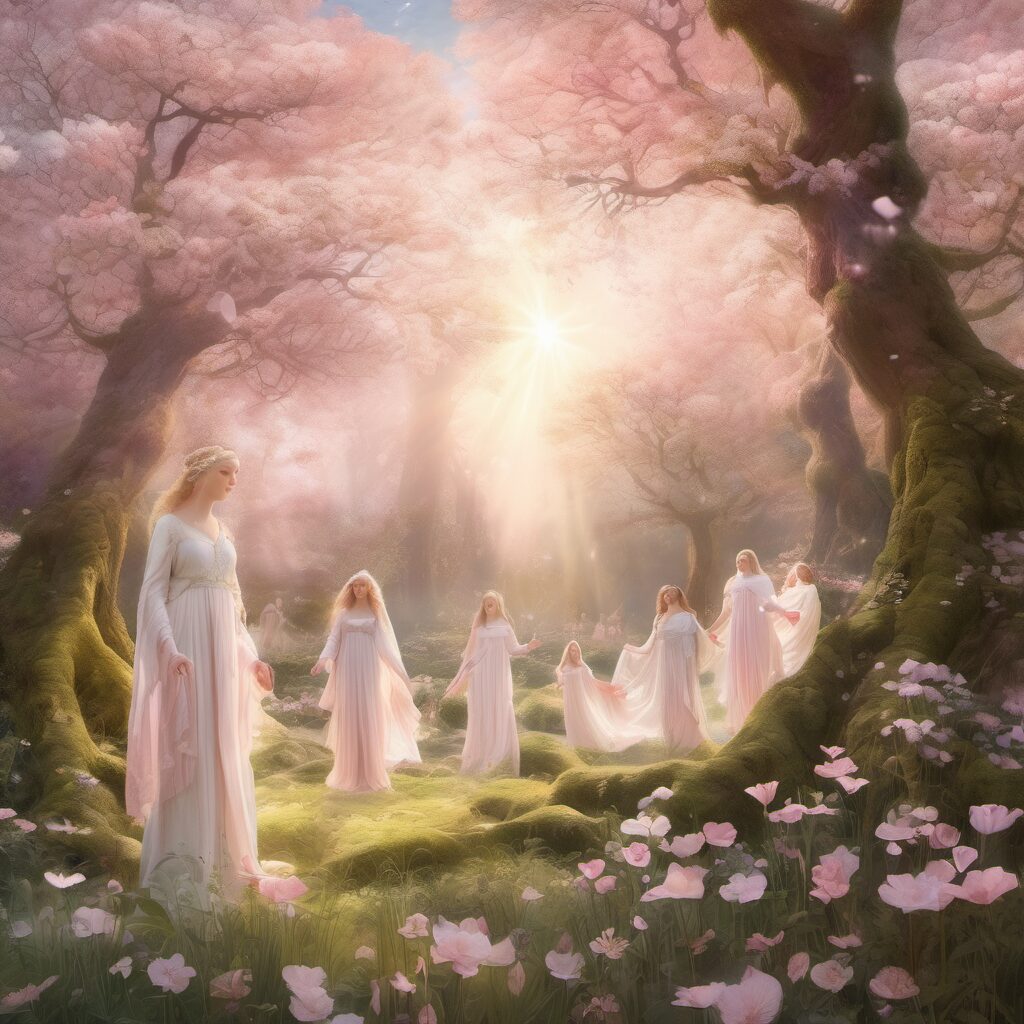
Goddesses of Spring: An Introduction to the Pagan Pantheon
“In many ancient cultures, spring was a time of renewal and rebirth, often associated with goddesses who symbolized fertility, growth, and new life.” – Modern Paganism 101
Eostre/Ostara: The Germanic Goddess of Spring
The name “Easter” is derived from Eostre, the Anglo-Saxon goddess of spring and fertility. She was believed to bring warmth, light, and new life to the world during the spring equinox.
- Appearance: She is often depicted as a young woman dressed in white and carrying flowers or eggs.
- Symbols: Eostre’s symbols include rabbits, hares, birds, and eggs.
Persephone: The Greek Goddess of Spring and Underworld
Persephone is the daughter of Zeus and Demeter, the goddess of agriculture. Each year, she was abducted by Hades, the god of the underworld, plunging the world into winter. Her return brought spring.
- Appearance: Persephone is usually portrayed as a beautiful maiden adorned with flowers and carrying a pomegranate.
- Symbols: Her symbols include pomegranates, poppies, and serpents.
Blodeuwedd: The Welsh Goddess of Spring
Blodeuwedd was created by the sorcerer Gwydion to serve as a wife for Lleu Llaw Gyffes. Made from flowers, she represents the beauty and fleeting nature of spring.
- Appearance: Blodeuwedd is typically depicted as a woman made of flowers.
- Symbols: Blodeuwedd’s symbols include flowers, owls, and cuckoos.
Ceres: The Roman Goddess of Agriculture and Harvest
While not strictly a spring goddess, Ceres plays a crucial role in the spring planting season. She is often associated with Demeter, her Greek counterpart.
- Appearance: Ceres is typically depicted as an older woman holding sheaves of wheat or corn.
- Symbols: Ceres’ symbols include grains, cornucopia, and snakes.
Leave a Reply