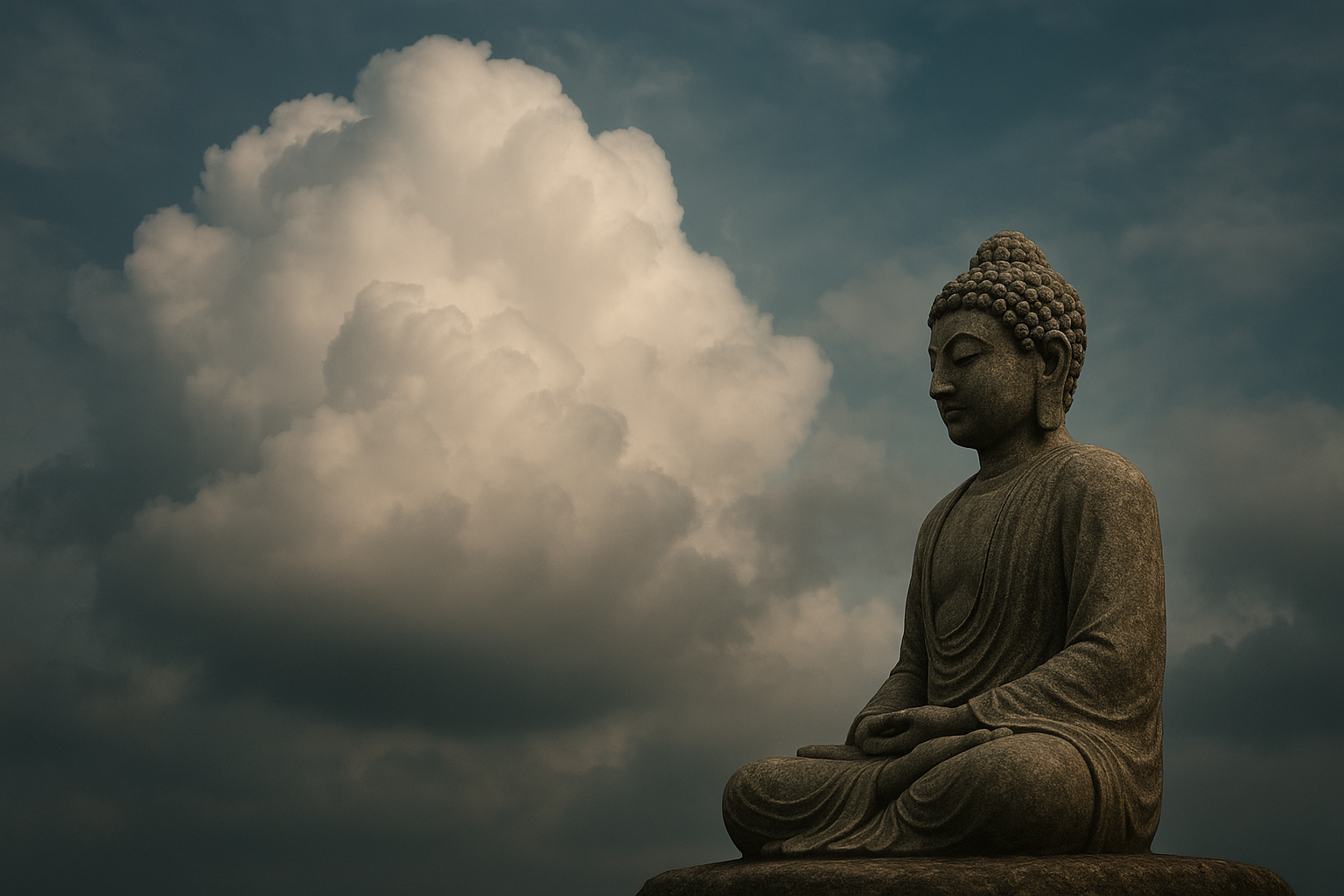
In the pantheon of spiritual literature, few works have sparked as much intrigue as The Cloud of Unknowing, a 14th-century Christian mystical text. Similarly, in Zen Buddhism, the enigmatic beauty of koans has been a source of profound insight for centuries. Both approaches invite practitioners to transcend intellectual understanding and enter a space where unknowing leads to the highest wisdom.
The Cloud of Unknowing
The Cloud of Unknowing is an anonymous work from the medieval period that aims to guide readers toward achieving a direct experience of God. The text encourages believers to embrace a state of ‘unknowing’ to experience divine presence:
“For He may well be loved, but not thought. By love He can be caught and held, but by thinking never.”
The work emphasizes the limitations of human understanding and suggests that one must surrender intellectual striving to gain deeper spiritual insight. The ‘cloud’ represents a veil of unknowing, a symbolic barrier that hides God from the intellect, urging believers to leap into faith and love without the confines of human logic.
- Love Beyond Knowledge: The text highlights the necessity of loving God beyond the capacity of human reasoning. It urges readers to place love above all and dispenses with traditional scholastic teachings.
- Intellectual Humility: The author encourages embracing the humility of the intellect as a pathway to spiritual awakening.
Zen Koans: Mystical Riddles of Enlightenment
Zen Buddhism offers its own path to transcendental wisdom through koans—paradoxical anecdotes or riddles that defy logical reasoning. Koans are designed to open the mind to deeper levels of consciousness. The classic koan “What is the sound of one hand clapping?” exemplifies how these riddles challenge conventional thought.
The practice of engaging with koans—known as ‘koan study’—serves as a meditative tool to break free from dualistic thinking. Renowned Zen master D.T. Suzuki describes their purpose eloquently:
“The function of a koan is to bring about in us a state of consciousness, to awaken us to a new dimension of the mind.”
- Beyond Rationality: Koans are designed to jolt the practitioner out of ordinary thought patterns, leading them toward an intuitive understanding of reality.
- Mental Liberation: By contemplating koans, one gradually learns to transcend analytical barriers and experience a direct, non-conceptual awareness.
The Intersection of Mystical Traditions
Despite their distinct religious contexts, The Cloud of Unknowing and Zen koans share a common goal: to cultivate a wisdom that transcends intellectual comprehension. Both invite practitioners to embrace the mysteries of existence and to dwell in a state of awe and wonder.
- Spiritual Paradoxes: Each tradition employs paradox as a method for breaking free from limited perspectives.
- Surrender and Liberation: The act of surrender—a common theme in both teachings—paves the way for a profound sense of liberation.
Embracing Unknowing in Modern Times
In today’s fast-paced world, where information is at our fingertips, the concept of ‘unknowing’ might seem counterintuitive. Yet, this very state may offer the clarity and peace needed to navigate a landscape teeming with distractions. By quieting the mind and stepping into the unknown, we may uncover a deeper, more authentic form of understanding.
Reflecting on this, spiritual teacher Ram Dass once noted:
“The quieter you become, the more you can hear.”
In both Christian mysticism and Zen Buddhism, the journey is not about acquiring more knowledge but about stripping away layers to reach the essence of being. Both traditions illuminate a path where unknowing becomes a profound act of wisdom.
A thorough appreciation of The Cloud of Unknowing and Zen koans encourages us to seek wisdom beyond conventional understanding. Like a sculptor revealing a statue by removing excess marble, these traditions invite us to release the need for certainty and, in doing so, discover the boundless potentials of the human spirit.