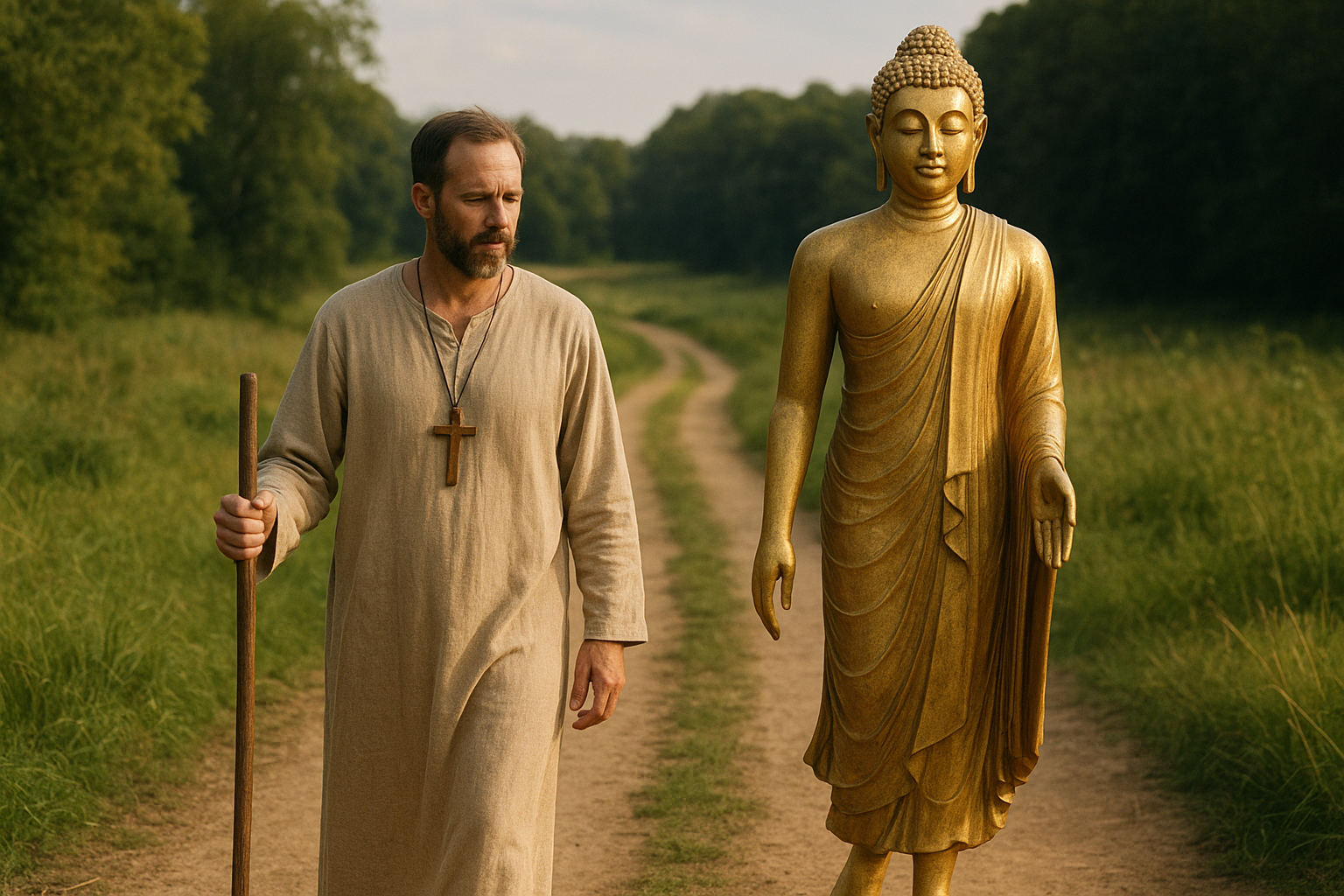
Pilgrimage has been a sacred practice across cultures and religions, offering believers a path to both an outer journey through sacred landscapes and an inner journey toward spiritual awakening. Whether following in the footsteps of Christ or tracing the path laid by the Buddha, the act of pilgrimage can transform the heart and soul, aligning the physical journey with a profound spiritual quest.
The Significance of Pilgrimage
Pilgrimage, in both Christian and Buddhist traditions, extends beyond mere travel. It is an act of devotion, penance, and search for deeper meaning. Pilgrims leave the comfort of daily life to immerse themselves in uncertainty, challenge, and ultimately, spiritual growth.
- Physical Journey: Physical hardships faced during pilgrimage often mirror the challenges of life, teaching resilience and humility.
- Mental Reflection: The solitude of pilgrimage offers space for introspection, helping pilgrims confront personal truths.
- Spiritual Transformation: Encountering holy places and engaging in prayer and meditation facilitates a deeper connection with the divine.
As Thomas Merton expressed, “The geographical pilgrimage is the symbolic acting out of an inner journey. The inner journey is the interpolation of our soul’s curiosity and a deep connection with what lies beyond our daily perception.”
Pilgrimage in Christianity
In the Christian tradition, pilgrimage has been associated with the quest for divine forgiveness and a closer relationship with God. Historic Christian pilgrimages often lead to Jerusalem, Rome, Santiago de Compostela, and other holy sites. The act of walking where Christ or His saints walked serves as an inspiration and a tangible link to faith.
“Blessed are those whose strength is in you, whose hearts are set on pilgrimage.” – Psalm 84:5
The route to Santiago de Compostela, known as the Camino de Santiago, is one of the most famous Christian pilgrimages. Pilgrims walk hundreds of miles to the cathedral where Saint James is said to be buried, experiencing both community and solitude along the way.
“When I went to that pilgrimage, I carried a heavy burden, but I returned with my soul lightened and my steps ready for the new life ahead,” shares one pilgrim about her journey on the Camino.
Buddhist Pilgrimage
In Buddhism, the pilgrimage is often centered on visiting sites connected to the life of Siddhartha Gautama, the Buddha. These sites, such as Lumbini (birthplace), Bodh Gaya (place of enlightenment), Sarnath (first sermon), and Kushinagar (death), are revered as places for meditation and reflection.
- Lumbini: Located in present-day Nepal, this sacred garden is recognized as the birthplace of the Buddha.
- Bodh Gaya: Under the Bodhi Tree, Siddhartha attained enlightenment and became the Buddha. Pilgrims meditate here, seeking their own insights.
- Sarnath: The site of the first sermon symbolizes the Buddha’s mission to spread his teachings.
- Kushinagar: The place where the Buddha attained Parinirvana, marking the final release from the cycle of rebirth.
In Buddhism, the pilgrimage goes beyond the act of visiting. It is a path to enlightenment through the practice of the Buddha’s teachings. As the Dalai Lama notes, “A pilgrimage is not just about visiting holy sites; it is about opening your heart and attuning to the compassion that the Buddha exemplifies.”
Commonalities in Pilgrimage
Despite their differences, Christian and Buddhist pilgrimages share profound commonalities:
- Purpose: Both are quests for spiritual growth, introspection, and a deeper connection with the sacred.
- Ritual: Rituals and prayers enhance the experience, grounding pilgrims in their spiritual traditions.
- Transformation: The journey itself becomes a transformative process, altering one’s perception of self and life.
Pilgrimages encourage believers to step outside their comfort zones, pushing them towards spiritual awakening. As the poet T.S. Eliot eloquently stated, “The end of all our exploring will be to arrive where we started and know the place for the first time.”
The Inner Journey
Ultimately, pilgrimage serves as a metaphor for the inner journey each person must embark upon to attain peace and enlightenment within. It is where the outer path and inner exploration converge, fostering an experience that melds body, mind, and spirit. Whether walking in the footsteps of Jesus or tracing the Buddha’s paths, the ultimate goal is self-discovery and spiritual fulfillment.
In the words of Joseph Campbell, “A sacred place is an extraordinary place, for it is at such a place that one finds one’s true self.” Pilgrimage as an inner journey offers a path toward this sacred self-awareness, guiding pilgrims to find harmony within and embrace the divine presence in all things.
By engaging with the act of pilgrimage, individuals accept a sacred calling: to walk with Christ, to walk with the Buddha, and ultimately, to walk the path of the heart.
For more insights on pilgrimage, visit National Geographic – Pilgrimage.