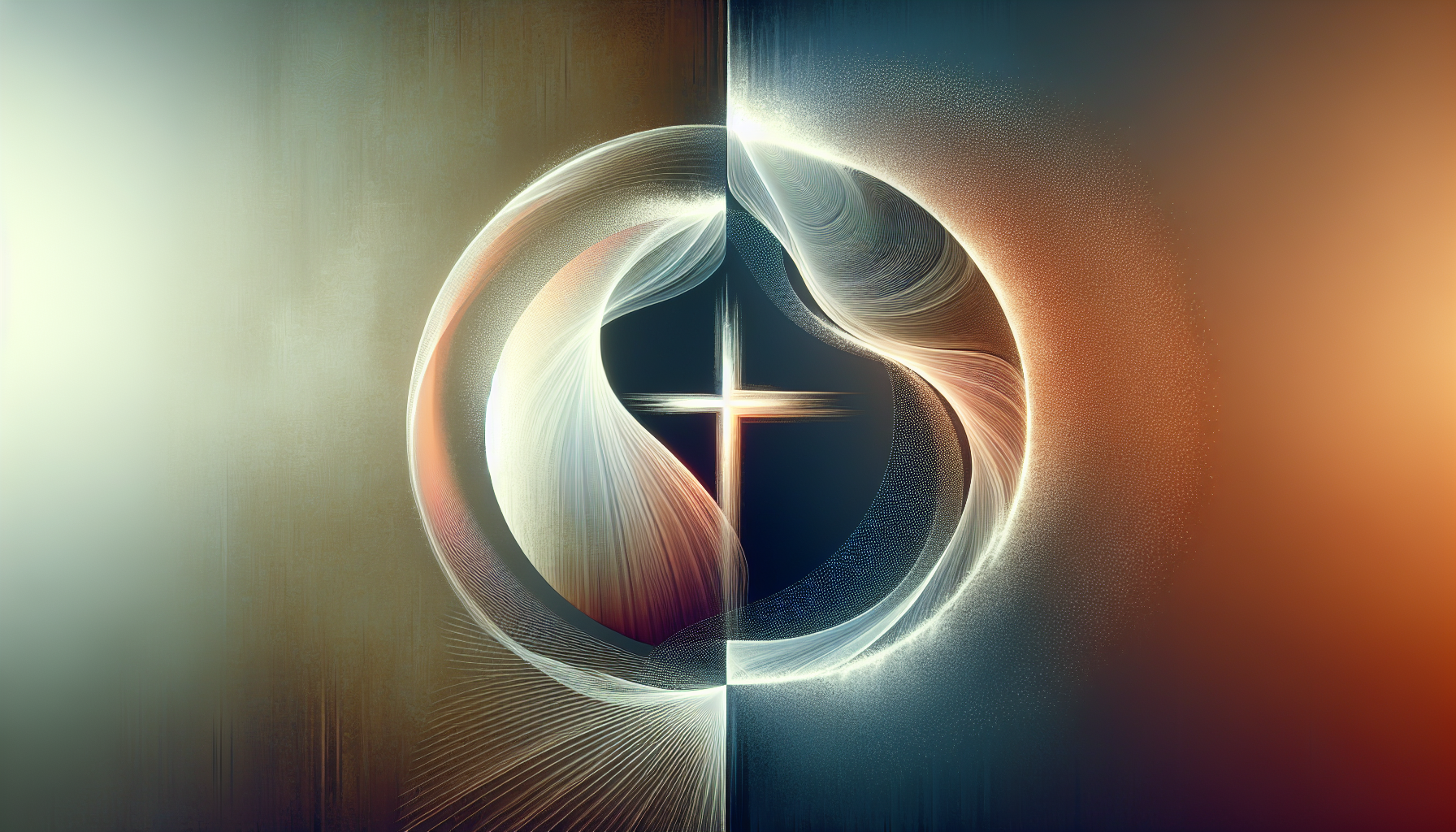
Throughout human history, symbols have served as profound vessels of meaning, unlocking secrets of the spiritual realm and guiding souls towards deeper understanding. Among such symbols, the cross and the empty circle stand out as metaphors for surrender and emptiness, pathways to profound inner silence. This article seeks to explore these archetypes, rooted in rich traditions and teachings, and how they can guide us to the tranquil center of the heart.
The Cross: A Symbol of Surrender
The cross, a universal symbol seen in various forms across different cultures, is most prominently associated with Christianity. It represents the crucifixion of Jesus Christ, an act of ultimate surrender and sacrifice. In Christian spirituality, the cross is more than just a representation of suffering; it is a symbol of the path of redemption through surrender.
“For God so loved the world that he gave his one and only Son, that whoever believes in him shall not perish but have eternal life.” — John 3:16
The act of surrender on the cross is a profound invitation to relinquish personal will in favor of a higher purpose. It embodies vulnerability and trust in the face of the unknown. As believers meditate on the cross, they are reminded that surrender is not defeat but a gateway to spiritual renewal and profound peace.
- Surrender in Tradition: The symbolism of the cross is far-reaching, appearing in various forms, from the Celtic cross to the ankh of Ancient Egypt, each representing a connection to the divine and the harmony of opposites.
- Personal Reflection: Invoking the image of the cross in moments of meditation can facilitate personal transformation, encouraging individuals to let go of ego-driven desires.
Beyond its religious connotations, the cross serves as a tool for spiritual growth. It invites individuals to confront their pain, acknowledge it, and transform it through love and forgiveness.
The Empty Circle: Embracing Emptiness
In stark contrast to the cross stands the empty circle, a symbol frequently associated with Zen Buddhism and Taoism. The circle, often referred to as the Enso, represents enlightenment, the universe, and the void. It embodies the notion of emptiness, a concept pivotal in Eastern philosophy.
“Form is emptiness, emptiness is form.” — The Heart Sutra
In Buddhism, emptiness is not a void of nothingness but a space of infinite potential. It is the recognition that all things are interconnected, devoid of inherent self. Through understanding emptiness, one learns to let go of attachments and embrace the flow of life.
- Understanding Emptiness: In Zen, the Enso is often drawn in a single brushstroke, encapsulating the moment of complete focus and the letting go of self-consciousness.
- Empty Circle in Practice: Practitioners use the Enso as a meditative focal point, a means to touch the essence of being beyond thought and ego.
The empty circle is an invitation to step into the silence of the heart, where the chatter of the mind is quieted, and one can rest in the present moment.
Intersection of Surrender and Emptiness
At first glance, the cross and the empty circle may seem to represent opposing principles. However, they both guide practitioners to a similar state of spiritual awakening through different pathways.
“True happiness is found in surrendering our heart to these very simple, yet profound practices.” — Pema Chödrön
- Inner Silence: The surrender symbolized by the cross encourages letting go of the ego, while the emptiness of the circle invites openness. Both result in a serene heart open to divine wisdom.
- Unification: By embracing both symbols, one can achieve a balance, stepping into the silence where the heart speaks without noise.
These practices remind us that true power comes from embracing vulnerability, and enlightenment from embracing emptiness. Each symbolizes a part of the spiritual journey towards peace.
Practices for Integrating the Cross and the Empty Circle
To integrate the teachings of the cross and the empty circle into daily life, individuals can engage in practices that foster surrender and openness. Some suggestions include:
- Meditative Reflection: Spend time focusing on images of the cross and the Enso. Contemplate their meanings and how they resonate within your life.
- Breath Work: Use deep breathing to connect to the present moment, aligning with the surrender of the cross and the openness of the empty circle.
- Journaling: Write about personal experiences of surrendering control or embracing emptiness, noting any insights or feelings that arise.
By engaging in these reflective practices, individuals can deepen their understanding of these symbols, using them as anchors in the chaotic waters of everyday life.
Conclusion: Meeting in the Heart’s Silence
The cross and the empty circle, though distinct in their cultural origins and philosophical foundations, converge in the heart, leading us to the same truth—the necessity of silence and surrender in spiritual awakening. Embracing both symbols enables a journey toward inner peace, where the heart can listen and speak its quiet language.
Ultimately, the meeting of the cross and the empty circle within the heart invites us to live a life of compassion, openness, and unyielding love, transcending the ordinary and touching the divine.
For further reading, consider exploring the writings of Thich Nhat Hanh and Pema Chödrön, who offer profound insights into the heart’s silence and the journey of the spirit.